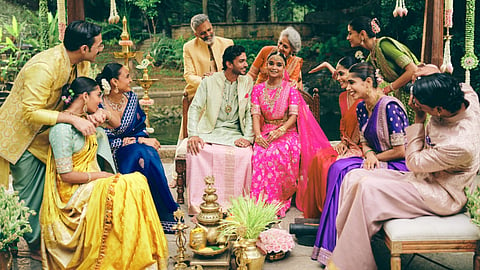

What does a wedding wardrobe look like when the bride is no longer dressing for a prescribed idea of bridalhood? In Anita Dongre's new campaign Love is Home, the bride turns inward, looking to memory, belonging and the quiet intimacy of coming home. Benarasi weaves, nature-inspired motifs and a palette of rani pink, amber and olive replace bridal convention with something more personal. Heritage is allowed to breathe, evolve and find its place in the lives of modern brides. Here' an excerpt from the interview.
M: Love is Home approaches bridalwear through the idea of belonging rather than spectacle. What did you want this collection to say about the modern Indian bride and the way she dresses for her wedding?
AD: Today's bride is deeply personal in the way she approaches her wedding. She is not dressing to perform a role; she is dressing to celebrate a moment that feels meaningful to her. She wears heritage with ease and lightness. With Love is Home, I wanted to explore the idea that a wedding is ultimately about connection, about two families, histories and worlds coming together. The clothes reflect that warmth and intimacy, placing emotion at the heart of the story.
M: Benarasi is central to the collection. What draws you to the textile, and what did you discover while reimagining such a deeply rooted craft for a contemporary bridal wardrobe?
AD: I've always been drawn to Benarasi weaving because it carries such depth of history and artistry. It is a timeless craft and a brand staple. Earlier this year, we crafted Rewild with the Benarasi artisans, giving it a contemporary context. For this collection, we worked closely with the weavers to reinterpret the language of the weave through flora and fauna motifs in with a different essence. The craft offers a breath of possibility and density, offering a fuller look without having to carry the weight of a heavy bridal lehenga.
M: The collection moves away from conventional bridal colours into rani pink, amber and olive. What was behind this colour story, and how do you think the modern bride's relationship with colour is changing?
AD: The colours were inspired by memory rather than convention. They reminded me of treasured textiles tucked away in family cupboards, colours that feel familiar and nostalgic yet unexpectedly fresh. Brides today are much more confident in choosing colours that reflect their personality rather than following a prescribed palette, and I think that individuality is beautiful.
M: There is something deliberately nostalgic about the collection, yet the clothes feel distinctly contemporary. How do you strike that balance between nostalgia and modernity without making the clothes feel retro?
AD: For me, nostalgia is not about recreating the past. It is about carrying forward the emotions, memories and values that matter. The balance comes from pairing timeless craftsmanship with silhouettes that feel effortless and relevant to the way women live today. The intention is always to honour tradition while allowing it to evolve.
M: Anita Dongre has always had a strong relationship with Indian craft and artisanal techniques. How important is it for you to keep evolving traditional crafts rather than simply preserving them?
AD: It is essential. Preservation alone is not enough. Crafts survive when they continue to be worn, appreciated and adapted to contemporary life. My role is to create new contexts for these traditions so that they remain economically viable, culturally relevant and meaningful for future generations.

M: Weddings today are becoming increasingly personal. How has the rise of more intimate, individualised weddings changed the way you design bridalwear?
AD: Brides today want clothing that feels authentic to who they are. We also see a lot of global south Asians coming home to get married, but choosing to have a home-style wedding in their grandparents’ homes. They are looking for versatility, comfort and emotional connection as much as beauty. That shift has encouraged us to create pieces that feel lighter, more personal and more reflective of individual style while still carrying the craftsmanship and significance associated with bridalwear.
M: Is there a particular piece from Love is Home that you feel captures the collection's philosophy most completely and why?
AD: The Ishtam Bridal Benarasi lehenga is a bright red bridal signature. I designed it to bring together the feeling of a nostalgic lehenga with my love for nature. I think all the sarees in this collection are special too. They embody everything Love is Home stands for, heritage and innovation, memory and renewal, individuality and togetherness. The motifs themselves speak to connection, while the weaving reflects the coming together of many threads to create something whole.
M: With sustainability being such an important part of your design ethos, how does creating heirloom-worthy bridalwear fit into your vision of more conscious fashion?
AD: To me, sustainability begins with longevity. A truly special garment should be treasured, passed down and revisited across generations. Bridalwear naturally lends itself to that idea because it carries emotional significance. When a piece is crafted with care and designed to endure, it becomes more than clothing. It becomes part of a family's story.