
- Avarna Jain,
Chairperson RPSG Lifestyle Media
Is The ‘Big Fat Indian Wedding’ Back?
Our expert panellists at the first-ever Manifest Salon weigh in on what the Indian wedding landscape looks like in 2024…
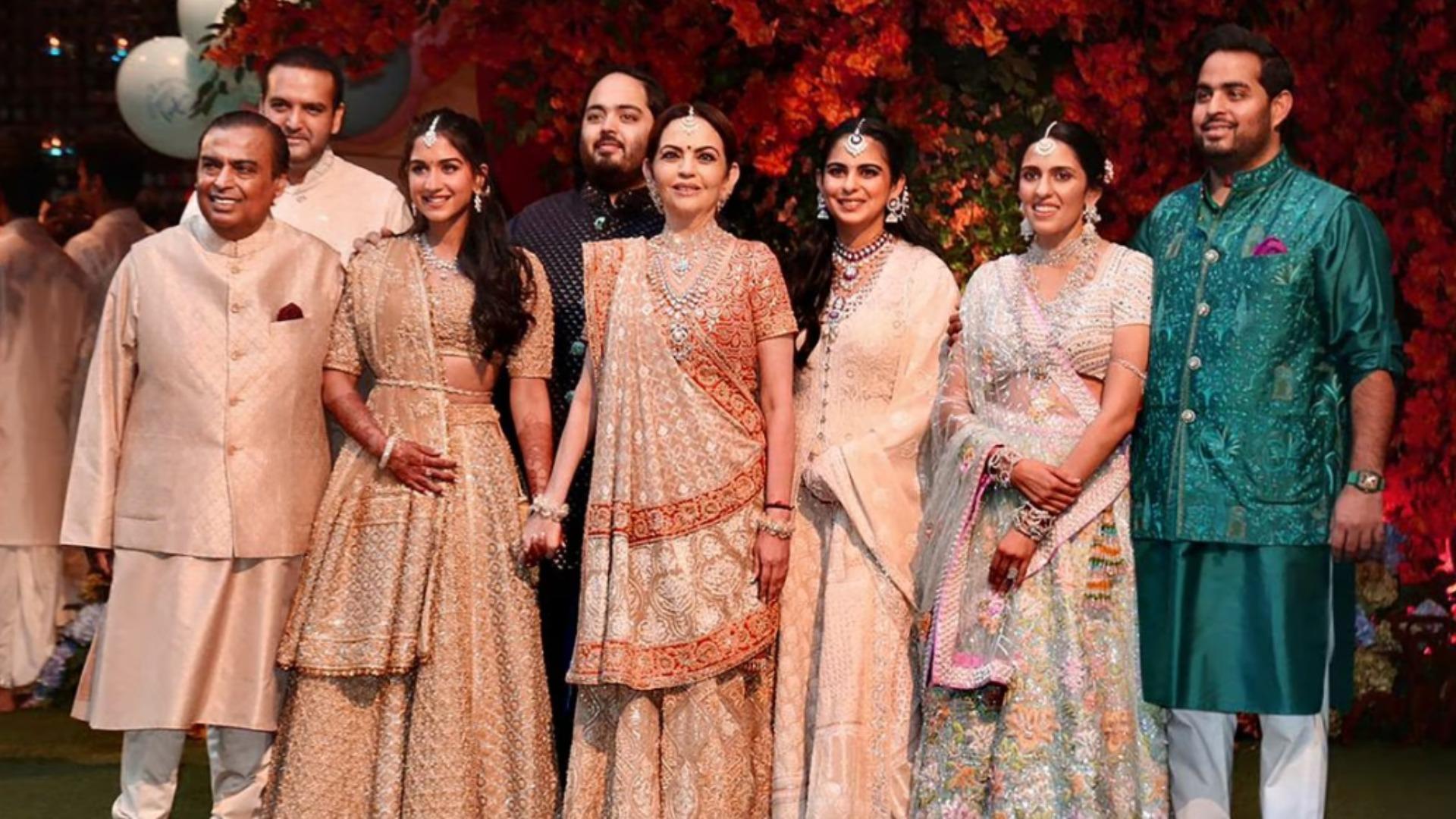
Indian weddings have always been a large-hearted affair. Some celebrations spill over multiple days, countless outfit changes and a long (long, long) guestlist that’s always a point of contention. The phenomenon was among the most impacted during the COVID-19 pandemic when government restrictions had dictated that the guestlist be truncated to 50-100 people. But how has the Indian wedding landscape changed in the post-pandemic world?
During the panel discussion atthe recently held Manifest Salon, moderator Kalyani Saha Chawla posed this question to WeddingLine founder Chetan Vohra. The entrepreneur was a part of the panel consisting of other industry icons like Aulearth founder Vivek Ramabhadran, matchmaker and relationship counsellor Geeta Khanna, celebrity dermatologist Dr Kiran Sethi, and designers Karan Torani and Rimple Narula.

(From left to right) Karan Torani, Geeta Khanna, Dr Kiran Sethi, Rimple Narula, Kalyani Saha Chawla, Chetan Vohra and Vivek Ramabhadran. Image credit: Manifest
“It has come back with a bang,” said Chetan, “50 people wedding was a birthday party at home. What are you going to do with 50 people? I had clients who came back and said we have more than 50 people in the immediate family.”
The entrepreneur admits that the pandemic brought about a change in mindset. “What the guests found out was that a smaller gathering of 100-150 people was far more meaningful than a huge event. It’s somebody who people actually wanted to invite, rather than the obligation of inviting the parents or dead grandfather’s entire phonebook. People have woken up to say that you can celebrate smaller.”

Chetan Vohra. Image credit: Manifest
The ‘Big Fat Indian Wedding’ has undergone a makeover, says Chetan. “Now, with no restrictions, we have people saying that they’ll have one function which is invariably a reception or a pre-wedding ceremony where you have to call everybody. But the rest of them are down to 100-150 people. Then they don't mind spending on everything else, like clothes or skin treatments or anything else. That’s the function they care least about.”
What do you think?

Where we give you a fast-paced look into everything you should wish list when you start to think about marriage. What to buy and how to dress, along with modern mithai and the homegrown fragrance makers to bookmark. Make special note of the feature on alta.

It has everything you need to make your wedding special. From the big comeback of red and pink in bridal wear to how the cool kids are wearing corsets to the celebration, there is only one way to get ready for a wedding —with enjoyment.

This section is a building block, a step to a better life. A place where we have all the answers. Or at least the beginning of a great conversation.

This needs very little description. It has travel with a special focus on incredible India, and a collection of wedding albums, sourced randomly, but collected with abundance because happiness has no limits.
