
- Avarna Jain,
Chairperson RPSG Lifestyle Media
The Whole Nine Yards with Alizeh Agnihotri
Inside the actor’s fresh, contemporary lens on celebration style and self-expression this wedding season...
Manifest
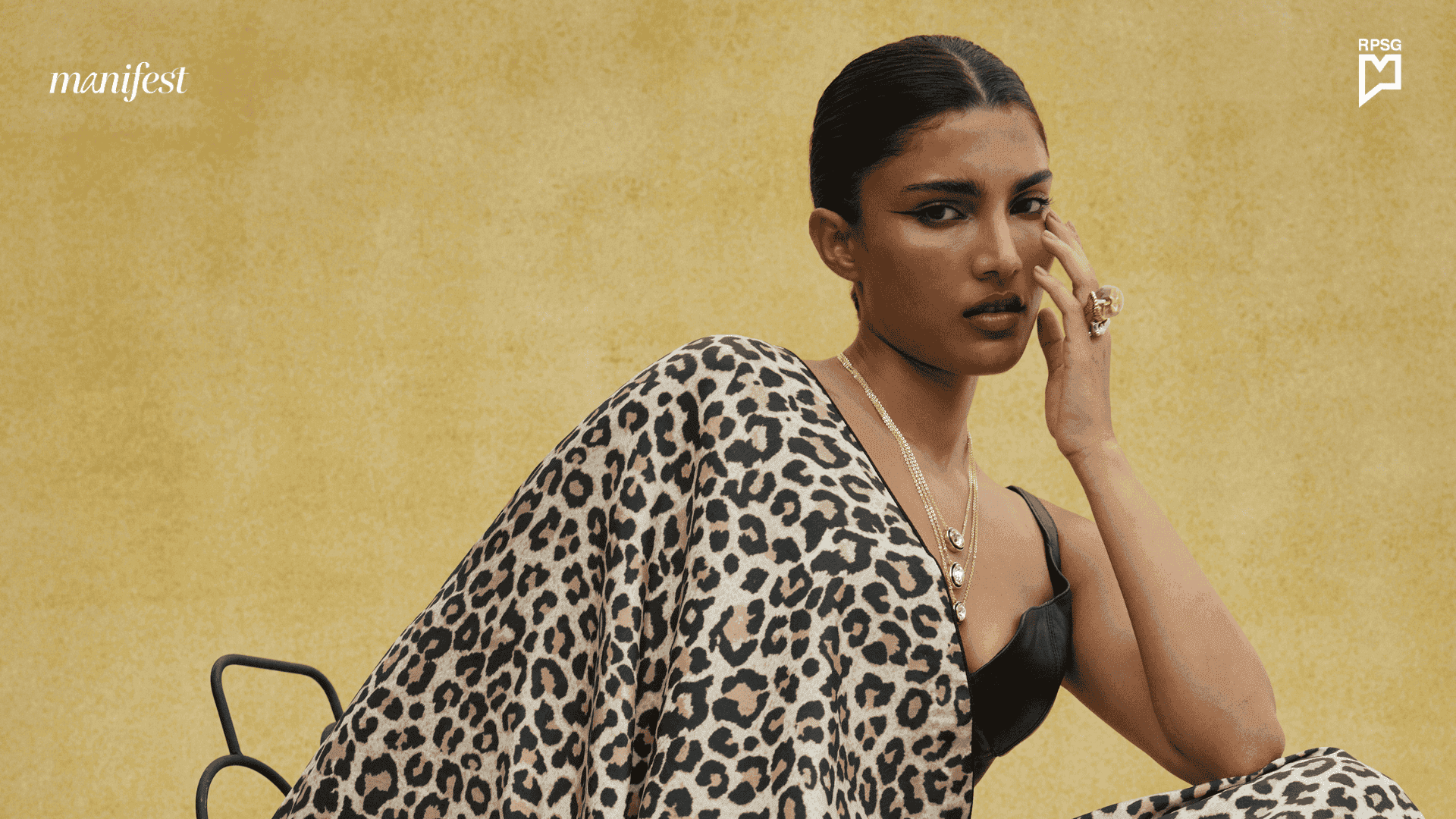
There is something unmistakably grounded about Alizeh Agnihotri. Even over a phone call, there is a thoughtful steadiness to the way she speaks. She takes her time with sentences, trims away fuss, and shows you who she is without trying to package it. For someone who belongs to one of the most recognisable film families in the country (the actress is actor and director Atul Agnihotri’s daughter and Salman Khan’s niece) and made a striking debut in Farrey [2023], Alizeh has an ease about her that feels refreshingly grounded. She speaks with intention, reflects before she answers, and carries her lineage with a calm self-assurance that never tries too hard to be anything other than honest.
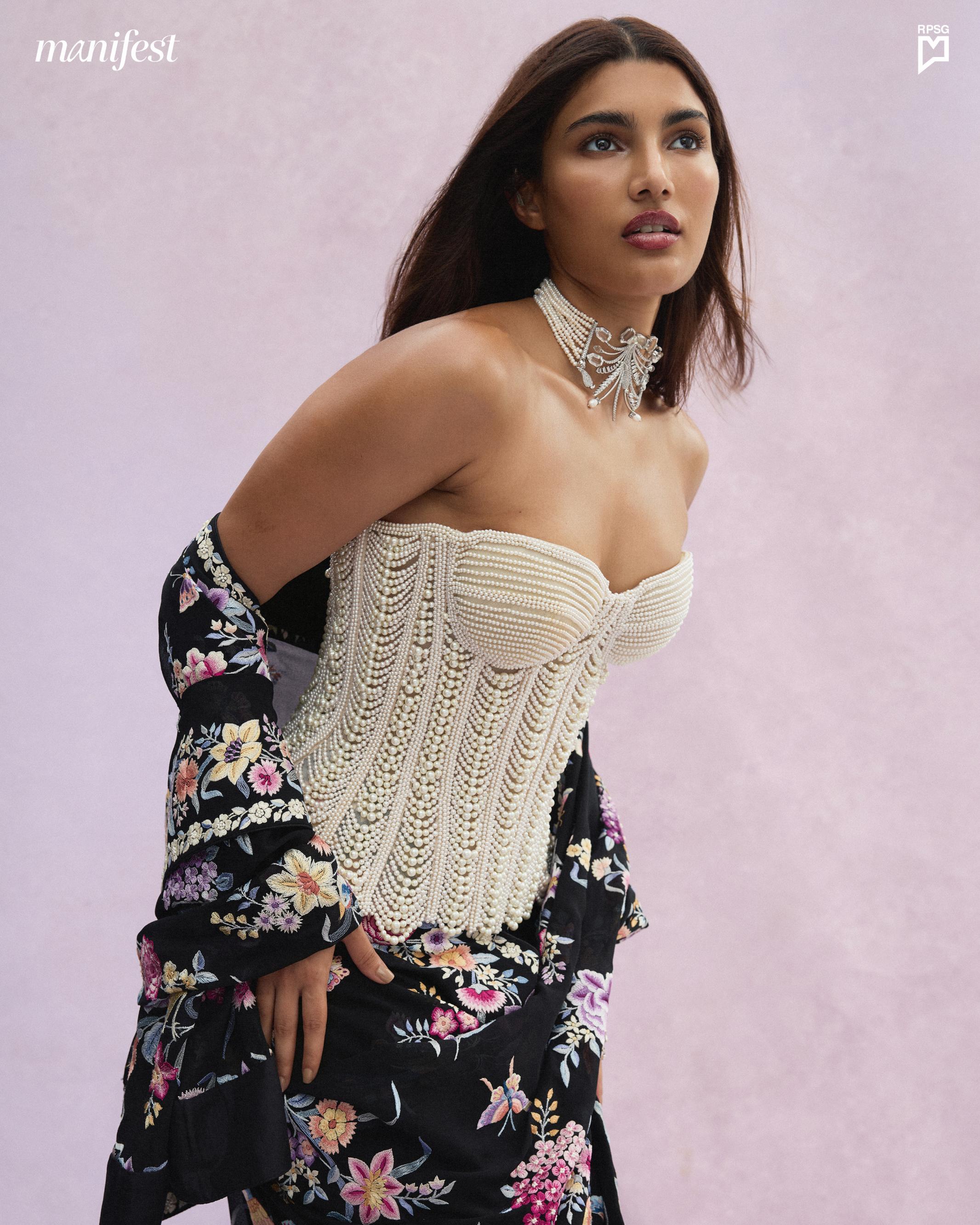
Sari, Ashdeen; corset, Krésha Bajaj; choker, Outhouse JewelleryManifest
That honesty is part of what makes her a compelling presence for a fashion story, especially one built around the sari. Even over the phone, you can sense her excitement about the shoot and its concept. “It was a lot of fun,” she says. “I’ve never really done Indian festive wear before. I always end up doing something super editorial, so it was nice to do something Indian with a contemporary twist for the first time.”
Her approach to the sari mirrors her approach to personal style. She recalls opting to add a leather jacket over a black traditional sari to ward off the cold while attending a friend’s wedding in Udaipur. The combination, effortlessly edgy yet rooted in something traditional, could easily be a metaphor for her aesthetic. “In my day-to-day life, I wear a lot of black. People describe me as edgy,” she says with a laugh, apologising for the cliché. But the instinct is clear. She gravitates toward timeless silhouettes and pieces that live beyond seasons. “I like the classic side of things. I invest in pieces that don’t go out of style. I really like labels like The Row for that.”
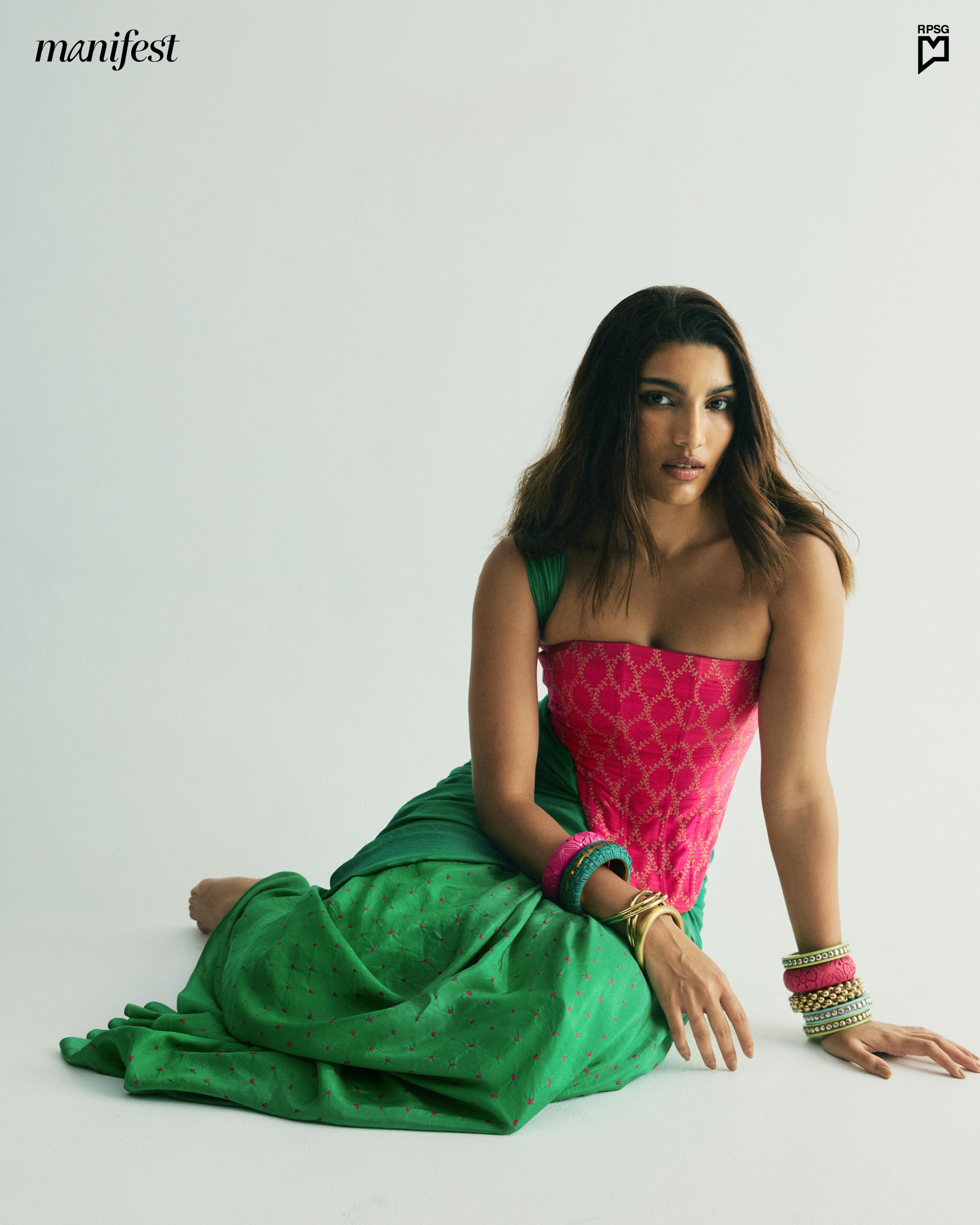
Sari, Injiri; corset, Bodements; bangles, Ritika SachdevaManifest
Her four hundred thousand odd followers on Instagram would attest to her being one of the most stylish celebrities among her contemporaries, but she insists that it wasn’t always that way. “Films came first, obviously,” she says, acknowledging the influence of a childhood spent on film sets and around creative professionals. Fashion arrived much later, as she began working and experimenting with designers and stylists. She admits that the exposure widened her world. “I realised I had a lot of interest in it because I got to try so many more looks than in my day-to-day life. But I try to follow trends as little as I can. I try to find a little bit of my personal self in everything I wear.”
Personal style, for Alizeh, is both inherited and entirely her own. She credits her mother, Alvira, who has worked on costumes for films like Sultan [2016] and the Tiger franchise, for
being instrumental in shaping her fashion journey so far. “I’ve always seen her create characters and give them an identity through their clothes. That gave me a strong sense of how fashion can represent who you are.” Her mother not only introduced her to brands, people and aesthetics, but also taught her something more valuable: intuition. “She taught me to wear what makes me feel comfortable and build my sense of individuality.” Her grandmother, the legendary Helen, also stands as a quiet influence. Alizeh studied the looks she wore on screen, not for nostalgia but for an understanding of character. “When I began figuring out my red-carpet personality, I would research what she wore back in the day. I unconsciously get influenced by the characters I’m playing too, and sometimes I incorporate elements of those characters into my day-to-day life.”
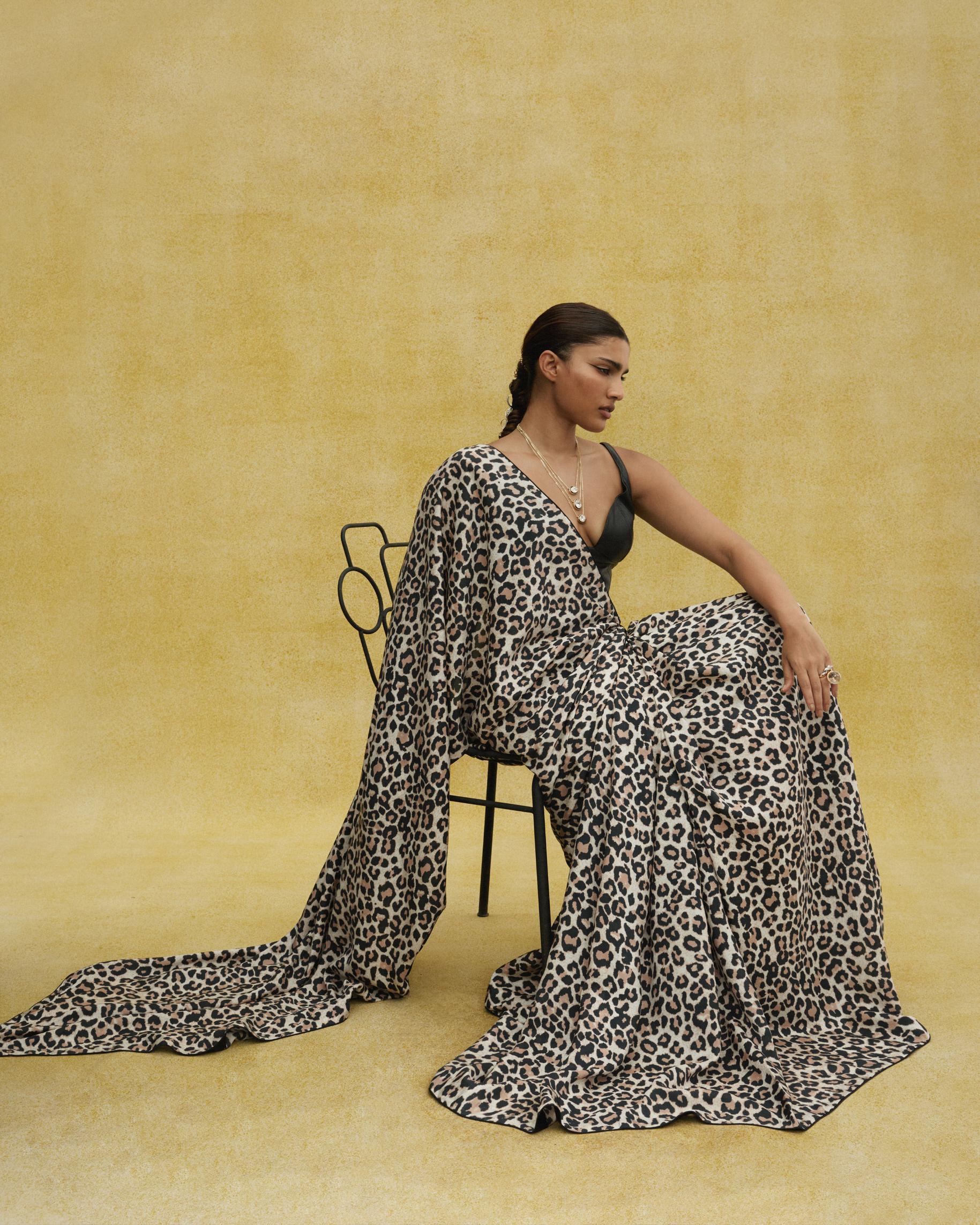
Sari, Ekaya Banaras; necklace, Isharya; rings, Outhouse JewelleryManifest
As with style, Alizeh credits her family for shaping her views on weddings. The first one that left a mark was her close friend Alanna Panday’s multi-day affair that became the blueprint for a number of wedding mood boards that followed. “Our mums have been friends since we were kids. It was the first wedding of our generation. Alanna worked on every single detail and every inch of that wedding mirrored her personality,” she says. What stayed with Alizeh was the clarity with which Alanna claimed her wedding as her own. “People forget weddings are about the bride and groom. But Alanna’s was truly hers.”
While she might not be a serial wedding attendee, Alizeh knows that having your social calendar choked up with wedding invites is an inevitable part of being an Indian. Today, when she dresses for an Indian wedding, she starts with the context. “Each function has a specific dress code these days. You get lookbooks and mood boards,” she says, amused. But her internal process remains the same. She can, in a way, anticipate what everyone else might wear and avoids taking that route. At a retro-themed wedding where she suspected saris would dominate, Alizeh wore a puff-sleeved vintage shirt as a blouse and reimagined the drape as a skirt. It is this instinct to personalise rather than perform that makes her stand out. Reinvention, therefore, for Alizeh, is not about rebellion. It is about recognition. “You keep the essence, you remember your roots and your culture, but add a touch of individuality… That’s the key.”
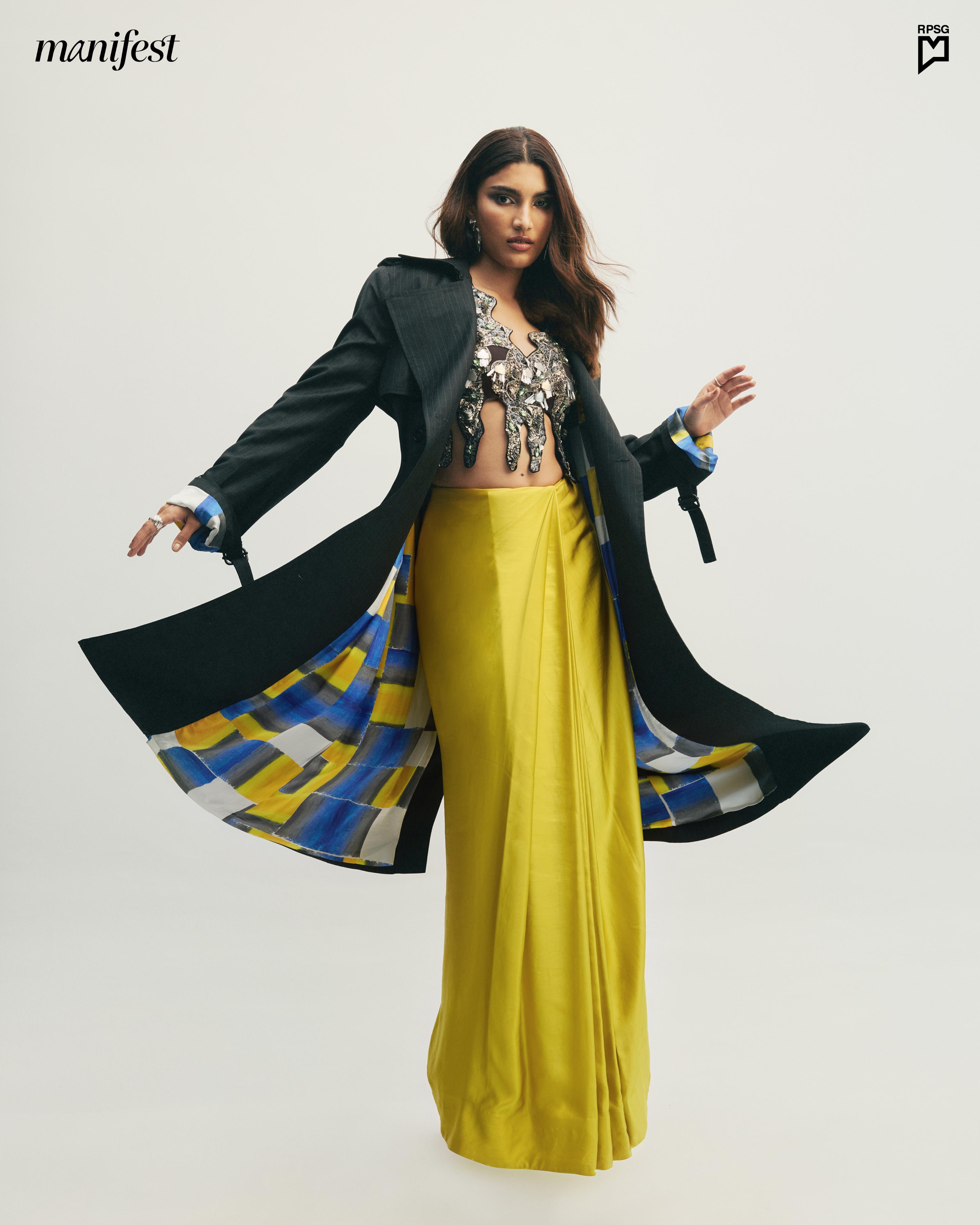
Sari and blouse, Graine; blazer, Shwetambari; rings and earrings, Viange VintageManifest
The looks that truly shifted fashion conversations around her were the two she wore to Anant Ambani and Radhika Merchant’s wedding in 2024. She shares that people still talk to her about the black vintage Sabyasachi lehenga she sourced from her aunt. “It was one of the first black bridal lehengas Sabya had showcased decades ago. I got it altered and it fit like a glove…like it was meant for me. I didn’t carry the dupatta it came with because the craftsmanship on the neck was incredible…and I wanted it to have a moment.” It was the kind of archival story that fashion loves, and it marked a turning point. “People started noticing what I wore after that.” Then came the Banarasi lehenga for the sangeet. “The theme was ‘Glam and Glitter’, and I knew there would be sequins and rhinestones everywhere. The Banarasi print was loud, but it had this powerful glam energy. And the corset gave it a western flair.” Those two looks defined her values in fashion, she says. “People often like digging into the archives of international designers, but Indian designers have a lot of cool archival too.”
It makes sense that she is drawn to archival fashion. She speaks about growing up in the late 90s and early 2000s and revisiting the things she and her peers once loved. After she returned from university in 2018, she found herself rediscovering old bags from her mother’s wardrobe. “Some were 10, 15, even 20 years old and they were so cool. People noticed them. Fashion, as they say, is cyclical.” She gravitates to the ’70s era in particular, rife with leather and fringe details and layered silhouettes. “I wish the Mumbai weather allowed me to layer up…,” she says.
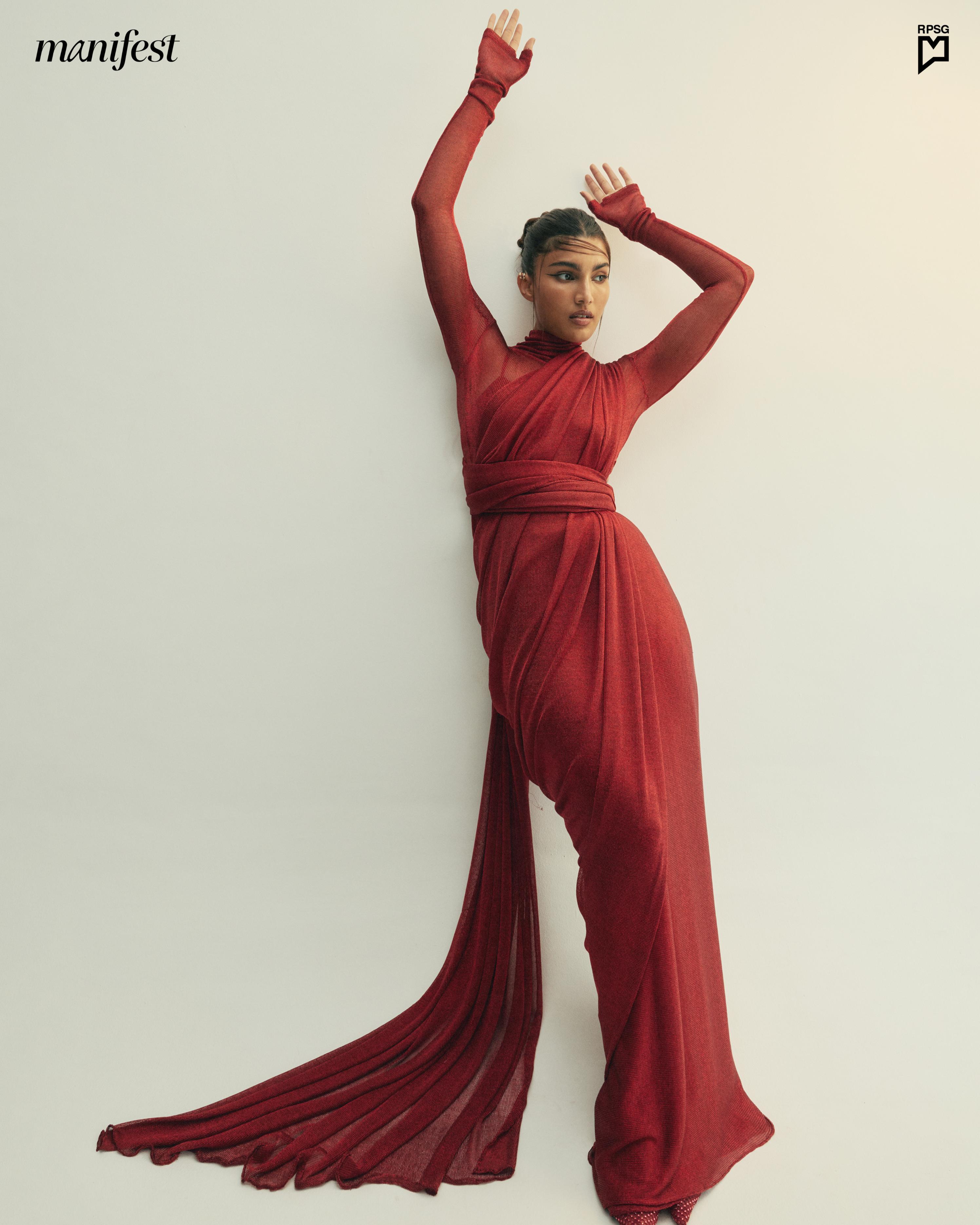
Sari, Bloni; ear cuffs, The Line; shoes, Jimmy ChooManifest
Halfway through our conversation, Alizeh makes an admission with a disclaimer that she’s about to “drop a bomb”. The actress is not fond of jewellery—at all! “My ears aren’t even
pierced.” The desire, she says, simply never came. She wears clip-ons, borrows statement jewellery from her mother when she has to, and admits she wouldn’t know the difference between priceless treasures and costume jewellery. It shapes her perspective on bridal jewellery too. “Even with engagement rings, I like the more abstract ones. Something personal to the bride’s aesthetic. If everyone has a three-carat diamond, they all look the same.” Would she choose a non-ring engagement symbol? Absolutely. “The first thing I do is check what everyone is doing and cancel that out,” she says. She cites Dua Lipa and Ariana Grande’s unconventional rings as signs of a larger shift. “Why follow something blindly? It should represent something about me.”
Her relationship with romance is just as clear-eyed. She loves classic comfort films like You’ve Got Mail [1998] and more recent gems like Past Lives [2023], but she views real relationships
with growing realism. “As you get older, you understand that individuality is important. You have to love and respect yourself first. Work on who you are and what you want. Only then can you truly love someone else.” As for where you might find her at a wedding, she laughs. “In a corner, having a conversation with someone I haven’t met in a long time.” Alizeh admits she is an “Irish exit” person and would rather leave quietly than suffer a prolonged goodbye.
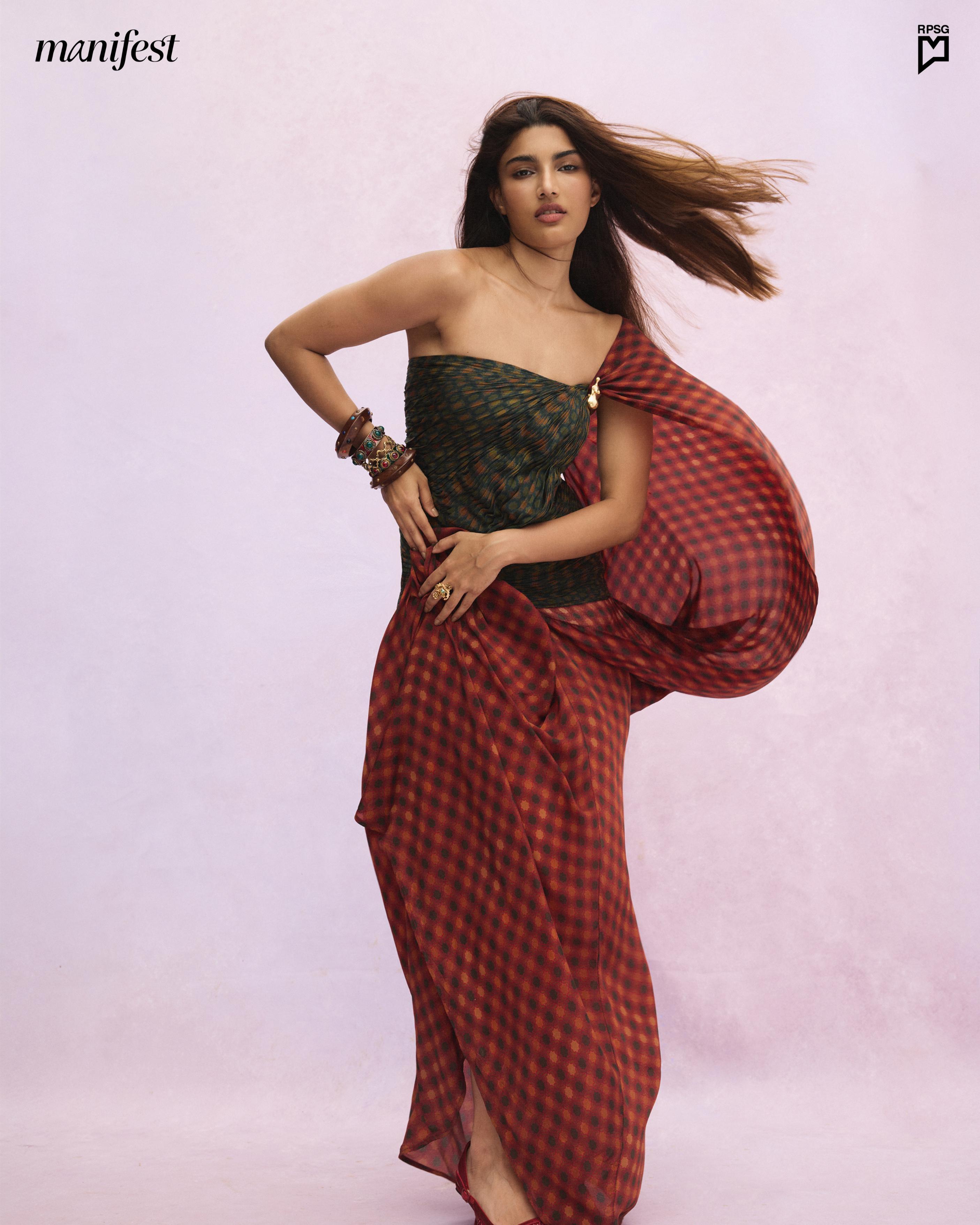
Sari, Siddhartha Bansal; brooch, The Yamin Collective; bangles, Chicory Chai and Simran Chhabra JewelsManifest
Right now, what excites her most is the work ahead. After Farrey, she is entering a phase where fashion and character may finally intersect in new ways. “I have a really interesting
year coming up,” she says. “I might be working in a project where I get to try interesting looks for the first time. Fashion is a big part of a character’s life. And it is coming at a time when I have a strong sense of my own aesthetic.”
It feels fitting. Alizeh is in a moment of quiet clarity. She knows who she is, but she is still curious. Still evolving. Still building a personal vocabulary of style, cinema, and self. A young actor navigating legacy and individuality, tradition and reinvention, black saris and leather jackets. And maybe that is her most compelling quality. She doesn’t chase the moment; she shapes it slowly, deliberately, and entirely on her own terms.
Photographs by Nishanth Radhakrishnan; Styling by Divyak D'Souza; Make-Up: Karma Choezom; Hair: Esther Quettawala; Styling Assistants: Poorvi Bora, Bhairavi Ahuja; Bookings Editor and Production: Varun Shah; Production Assistant: Danielle Mookhtiar; Celebrity Manager: Dharma Cornerstone Agency

Where we give you a fast-paced look into everything you should wish list when you start to think about marriage. What to buy and how to dress, along with modern mithai and the homegrown fragrance makers to bookmark. Make special note of the feature on alta.

It has everything you need to make your wedding special. From the big comeback of red and pink in bridal wear to how the cool kids are wearing corsets to the celebration, there is only one way to get ready for a wedding —with enjoyment.

This section is a building block, a step to a better life. A place where we have all the answers. Or at least the beginning of a great conversation.

This needs very little description. It has travel with a special focus on incredible India, and a collection of wedding albums, sourced randomly, but collected with abundance because happiness has no limits.
