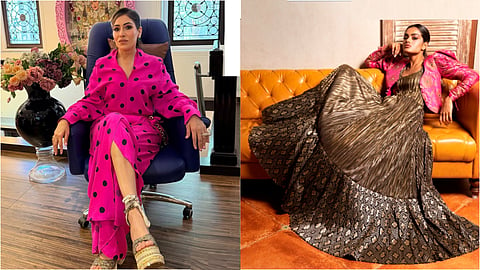

She’s dressed the who’s who in the world of fashion, society and entertainment from the late Sridevi to Deepika Padukone, Lara Dutta, Sonakshi Sinha and Parineeti Chopra, and she continues to evolve her world of couture. For Maheka Mirpuri, it’s also a milestone—30 years no less—in the industry that has been a playground of success and learning! And if she had to run a thread through that, Maheka would go by what she’s believed in—that you have to break the norm and reinvent to stay relevant.

For someone who started out with a hand-painted scarf, today Maheka has got tradition swinging into contemporary mode with her high-glamour athleisure creations that move from to exaggerated sleeves and dramatic capes to statement bows, corseted bodices and studded, handcrafted jackets. Queen of Maximalism, we ask? Maheka smiles that off, and here, at her atelier in Mumbai, she shares how she would rather love being experimental over anything else. Over to the philanthropist, designer and health aficionado in a fun chat…
Manifest (M): Maheka, you're marking 30 years for your label. From the day you started building such a celebrated couture house, what has the journey been like?
(MM): Thirty years feels incredibly emotional because when I began, I was simply following a dream and doing what I loved. I never imagined that journey would grow into a label that would become part of so many women’s most cherished moments.
Over the years, fashion became much more than creating beautiful clothes. It became about celebrating women, telling stories, and creating pieces that hold memories for generations. I have had the privilege of dressing remarkable women and collaborating with some of the most celebrated names across industries, but what means the most to me is the trust families have placed in us, generation after generation.
Through every chapter, my commitment to craftsmanship, creativity, and authenticity has remained unchanged. Trends come and go, but sincerity, emotion, and creating with purpose never go out of style. Looking back, I feel grateful, humbled, and excited for everything that still lies ahead.
Manifest (M): What has been the single biggest lesson entrepreneurship has taught you over these three decades?
(MM): The biggest lesson has been to trust your instinct. Fashion is emotional, and so is building a business. There will always be changing trends and differing opinions, but longevity comes from staying true to who you are.
I have never believed in designing for the moment. I believe in designing for the woman, her journey, and the emotions attached to what she wears. Patience, resilience, and consistency have taught me far more than success ever has. When you build something with honesty and heart, people connect with it, and that connection is what sustains a brand over time.
Manifest (M): Bridal wear today has undergone a dramatic transformation over the last three decades. How would you describe the evolution you've witnessed?
(MM): The transformation has been extraordinary to witness. Brides today are far more expressive, confident, and involved in every aspect of their wedding wardrobe. When I look at collections like Crimson Veil and Modern Maharani, they reflect exactly how bridal fashion has evolved over the years.
Today’s bride isn’t choosing just one outfit; she’s curating an entire story. She wants tradition, but she also wants individuality. She may embrace the richness of a Banarasi weave yet style it with a contemporary silhouette. She wants heritage crafts interpreted in ways that feel lighter, effortless, and relevant to her lifestyle.
What excites me most is that brides are no longer dressing to fit a mould. They're embracing bold yet thoughtful design elements such as exaggerated sleeves, dramatic capes, statement bows, corseted bodices, contemporary drapes paired with handwoven craftsmanship, and feathered accents. Today's bride isn't afraid to experiment, but every outfit is still designed to make a statement while honouring Indian craftsmanship. She's embracing colour, texture, personality, and emotion, while remaining deeply connected to our artisanal heritage. That beautiful balance between heritage and self-expression is what defines the modern bride today.
Manifest (M): What is the modern bride like today, compared to the brides you designed for in the 1990s?
(MM): Today’s bride is confident, self-assured, and deeply aware of who she is. She celebrates tradition, but she also embraces individuality in outfits such as Draped Sarees, flowing lehengas and shararas. Unlike brides of the 1990s, who often followed convention, today’s bride wants every detail to reflect her personality and lifestyle. She values comfort just as much as glamour and emotion just as much as aesthetics. Most importantly, she wants to feel like herself on her wedding day. That authenticity is what makes today’s bride so beautiful.
(M): Today's brides often seek versatility, comfort, and individuality. Is this a big part of how you design bridal collections?
(MM): Absolutely. Today’s brides want wardrobes that move with their lives. They are looking for pieces that feel luxurious yet effortless, and garments that can be revisited and styled in different ways over time, such as Haldi Shararas, Mehendi Lehengas, Cocktail gowns, and after party outfits.
Conversations during consultations have evolved. We speak not only about colour and embroidery but also about movement, destination weddings, functionality, longevity, and personal storytelling. Brides want outfits that capture emotion while remaining comfortable and easy to wear. Creating that balance between grandeur and ease has become central to the way we design.
(M): Do you enjoy merging traditional Indian craftsmanship with modern, western-inspired construction? Are Indian textiles increasingly getting a modern interpretation in bridalwear?
(MM): Absolutely. That philosophy has always been at the heart of my work. I believe the first thing a woman should wear is confidence, and fashion should never overpower her personality—it should enhance it. Whether it's Crimson Veil or Modern Maharani, every collection is built on a dialogue between heritage and contemporary design, where timeless craftsmanship meets modern sensibilities.
I love working with luxurious fabrics like organza, Banarasi silk, French taffeta, fine satins, handwoven brocades, and intricate embroidery, elevated with Swarovski embellishments and rich textures. The beauty lies in presenting these traditional elements through contemporary silhouettes, lighter constructions, and versatile designs that feel relevant to today's bride while retaining their cultural essence.
Indian textiles such as Benarasi silk, handwoven brocades, Chanderi, and Patola are timeless. Their beauty lies not only in their heritage but also in their ability to evolve with changing generations. Today's brides appreciate tradition but also seek individuality and ease, which is why we're seeing these textiles reimagined in fresher, more modern ways—through innovative cuts, unexpected styling, and contemporary craftsmanship.
(M): You've incorporated gold into your bridal creations so elegantly. Can you share more on walking the line between using gold and not making it look over the top?
(MM): Gold is deeply woven into our culture. It represents celebration, blessings, heritage, and emotion. Growing up, gold wasn't simply jewellery; it was something treasured, cherished, and passed down through generations. For me, incorporating gold into my designs is about honouring that sentiment while reimagining it for the modern woman.
I love interpreting gold in many different ways—through antique zari, metallic thread embroidery, woven gold textiles, Swarovski crystal embellishments, sequins, foil accents, delicate pearl detailing, intricate hand embroidery, gold appliqué, textured beadwork, and layered metallic surfaces. I also enjoy pairing these rich gold elements with vibrant jewel tones, unexpected colour palettes, and contemporary silhouettes to create pieces that feel regal yet fresh, expressive yet effortlessly wearable.
(M): Is modern athleisure also becoming a big part of the bridal wedding trousseau?
(MM): Absolutely, and I think that reflects the way women live today. Brides are travelling more, prioritising wellness, and seeking wardrobes that extend beyond the wedding itself. Conversations today aren’t only about lehengas and sarees. We discuss resort wear, honeymoon wardrobes, wellness retreats, easy separates, and pieces that can be worn long after the celebrations are over. I love this evolution because it makes the trousseau more personal. It becomes less about filling a wardrobe and more about curating a lifestyle that reflects who the bride truly is.
(M): Have destination weddings and multi-day celebrations changed the way brides approach their wedding wardrobe?
(MM): Completely. Weddings today are immersive experiences, with every celebration carrying its own mood, setting, and identity. Brides are thinking about travel, transitions, practicality, photography, and versatility in a much more thoughtful way. They want wardrobes that adapt beautifully across different events while maintaining a cohesive aesthetic.
As designers, this has inspired us to think beyond creating a single bridal ensemble and instead curate an entire wardrobe that narrates the bride's journey. From resort dresses and welcome lunch kaftans to Haldi shararas, cocktail gowns, and contemporary drape sarees, every look is designed with a distinct purpose. Collections like Maharani Athleisure, Modern Maharani, and Untamed Euphoria have been thoughtfully created for today's destination weddings, where glamour meets comfort, versatility, and effortless elegance. The modern bride wants to feel just as confident and comfortable as she does beautifully dressed, and that's exactly what these collections are designed to deliver.
(M): Is the bohemian bridal aesthetic dominant today?
(MM):I don't believe there is one dominant aesthetic anymore. Bohemian influences certainly have their place through fluid silhouettes such as drape sarees, shararas, flowing lehengas, contemporary gowns, and statement co-ord sets, along with layered styling, unconventional jewellery like statement cuffs, embellished gloves, shoulder jewellery, oversized earrings, and contemporary heirloom pieces, especially for destination celebrations. But today's bride is wonderfully eclectic, choosing elements that resonate with her personal style rather than following a single aesthetic.
She blends heritage with individuality and draws inspiration from multiple worlds. Couture today is less about following trends and more about creating a personal language. That individuality, in my opinion, defines contemporary luxury.
(M): Beyond fashion, you've also built a reputation as an entrepreneur and philanthropist. How have these different roles shaped one another?
(MM): For me, they have never been separate journeys. Fashion has given me a platform, but purpose has given that platform meaning. MCAN was born from something deeply personal. Cancer has touched my family, and the lives of people close to me, and I have always believed that if I have the ability to bring people together, I should use that platform for something larger than myself. Over the years, MCAN has become more than an initiative. It is a reminder that compassion, community, and collective action can create real change. As a woman and entrepreneur, I have learnt that success is not measured solely by what you build, but by the lives you touch along the way.
At the end of the day, I hope to be remembered not only for the clothes I created, but for the hope, love, and purpose that accompanied them.