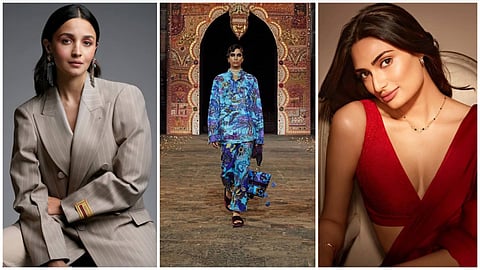

The allure of luxury goods is a never-ending love affair and over the years India has become a darling destination for legacy luxury houses. In fact, according to a recent report published by management consultancy Bain and Italian luxury association Altagamma. “The global luxury market is expected to grow by 11 to 13 per cent and reach €1.5 trillion in 2023 as brands lean into experiences and see an uptick in sales across most geographical markets," read the report.
Hence, it is no secret that the biggest international players are vying for the attention of one of the fashion-hungry Indian consumers who love shopping. But, there's a caveat: India’s market is such that cultural nuances influence the decision-making process. The discerning buyers thrive on personalised service and relationships, and brands are riding on this. Indians are always looking for something special; they love a personal touch with everything that’s offered to them.
Dubai-based Journalist, author and moderator Sujata Assomull agrees and tellsManifest, “Indian consumers were not going to simply accept what was offered just because it came from a Western luxury brand. We have a rich dressing culture in India. We haven’t fully adopted Western dressing norms—we still wear our traditional clothes and have a deep knowledge of craftsmanship. We are discerning, with a good understanding of international fashion trends, and while we enjoy high fashion, it must work for us.”
Hence, over the past few years, we have witnessed the launch of many limited-edition releases inspired by India and India-exclusive designs. Not just that, brands are also roping in known Indian names as their global brand ambassadors. Think Alia Bhatt for Gucci, Deepika Padukone for Cartier and Louis Vuitton, and even Priyanka Chopra Jonas for Bvlgari among others.
All eyes turned to India when the Dior showcase took place last year at the Gateway of India. A watershed moment for us, especially the Chanakya School of Craft. The showcase turned the spotlight on the long-standing relationship between the French brand and embroideries that define India’s heritage.
Other examples include such as the reimagined Lady Dior by artist Bharti Kher back in 2020. Jimmy Choo, which is known for releasing the annual Diwali capsule collection for India also released their inaugural jewellery collection for India in March 2022. Later in 2022, they announced a capsule collection titled ‘Shaan’ that was exclusive to India and featured iconic footwear designs.
In the same year, Louis Vuitton launched a one-of-a-kind shoe collection showcasing the impact of Rani Pink on India’s celebrations. There were accessories in gold too… These are both hues which have had a nod from India’s royal past, especially the Royals of Rajasthan.

As more capsule lines are being given a green signal, Indian consumers are enjoying it thoroughly.
Ex-VP Dior India and Founder of Rezon Luxury Silverware Kalyani Saha Chawla shares, “Brands not now but have been adapting to the local culture for a very long time. For the 10th anniversary of Dior, John Galliano sent off the runway a Rani Pink Dior Saddle which featured the D of Dior like a nath and gota embroidery on the edges of the bag…it was stunning. Even the Sabyasachi and Louboutin collaboration that took place at a time when there weren’t many collaborations happening was one of the best till now.”
Sujata says that when luxury first arrived in India, brands were unwilling to be agile or adapt their marketing strategies and products to suit the local market. She adds, “They had an almost rigid approach. Today, luxury brands fully recognise India's purchasing power—after all, Mumbai is the global capital of billionaires. So, they had to concede and adapt.”
Today Italian shoe and fashion brand Golden Goose is set to enter the Indian market by launching in Delhi and Bangalore this month and early next year in Mumbai. “For the same, they will be collaborating with an Indian artist. International brands for many years have wanted to appease the customer entering a new market by sending out a strong message that they want to embrace the culture. I think that synergy is what makes brands successful commercially too” adds Kalyani.
In an interview to Forbes India, Jean-Christophe Babin, Bulgari’s CEO said, “If we pay respect to Indian traditions, leverage its icons properly and understand local designs well, India for us could easily enter our top 10 markets in the next five years, and the top five in the next 10 years.”
Bvlgari too made its mark and indicated the importance of India’s cultural and financial affluence by launching its first mangalsutra in 2021. The Italian House has been paying special attention to India.
The campaign for the necklace featured Priyanka Chopra Jonas. Earlier this year, the Italian House launched another India-exclusive design known as the B.zero1 Kada Bracelet.
Christian Louboutin had collaborated with couturier Sabyasachi Mukherjee on a line of shoes and handbags a few years ago. Last year, the Parisian brand also released a capsule collection comprising 18 pieces. Known as ‘The India Wedding Edit’it was the largest edit done by a global brand for India.
Cut to today, Bulgari is all set to launch the Bulgari Bulgari Mangalsutra Sautoir Necklace at DLF Emporio's Treasury of Trousseau. Babin, Bulgari’s CEO, comments “The Bulgari Mangalsutra Sautoir Necklace beautifully blends our Roman heritage with Indian traditions. This piece showcases our dedication to honouring diverse cultures and also highlights our commitment to modern elegance.
We are thrilled to present this second exclusive creation, which celebrates both Bulgari’s timeless charm and the dynamic spirit of contemporary Indian women. We take great pleasure in catering to our Indian audience, creating designs that resonate with local traditions while enhancing our global vision of luxury and sophistication.”