
- Avarna Jain,
Chairperson RPSG Lifestyle Media
The Little Pieces Of Our Heritage That Are The Toe Rings
A bichiya's sacred legacy...

Bichiya Is The Way To Go!Motifs by Surabhi Didwania
Some don’t fit. But they’re forced on anyway. Others are more forgiving—they’re adjustable. Some are worn by the bride on her wedding day and stay in a pouch for years after that, others are worn by the bride for the rest of her life. They can hurt and leave a mark. They tarnish with time, some faster than others. Some always look like they’re new. They’re worn on the second toe, in a pair, but in silver, never gold—because gold, considered sacred, shouldn't be worn below the waist. Sometimes, mothers keep them to pass them down to their daughters, and daughters wear them in hopes of bringing good luck to their marriage. Some see them as a symbol of their marriage; some just wear them because they look pretty. And then there are people who wear them to enhance fertility—whether or not the belief holds, it lingers with them like hope.
Traditionally worn on the second toe of both feet, toe rings or Bicchiya are like little pieces of our heritage. And to those who believe, they symbolize a sacred union. Tarang Arora, Creative Director and CEO Of Amrapali Jewels point out that in Indian culture, married women wear toe rings as a symbol of their marital status, similar to how wedding rings are worn in other cultures. “The circular shape of the toe ring symbolizes eternity and completeness” he explains the profound idea. “In addition to their symbolic meaning, they are considered auspicious. There are even beliefs that they can improve blood circulation and balance energy, which adds another layer to their significance.” he adds.
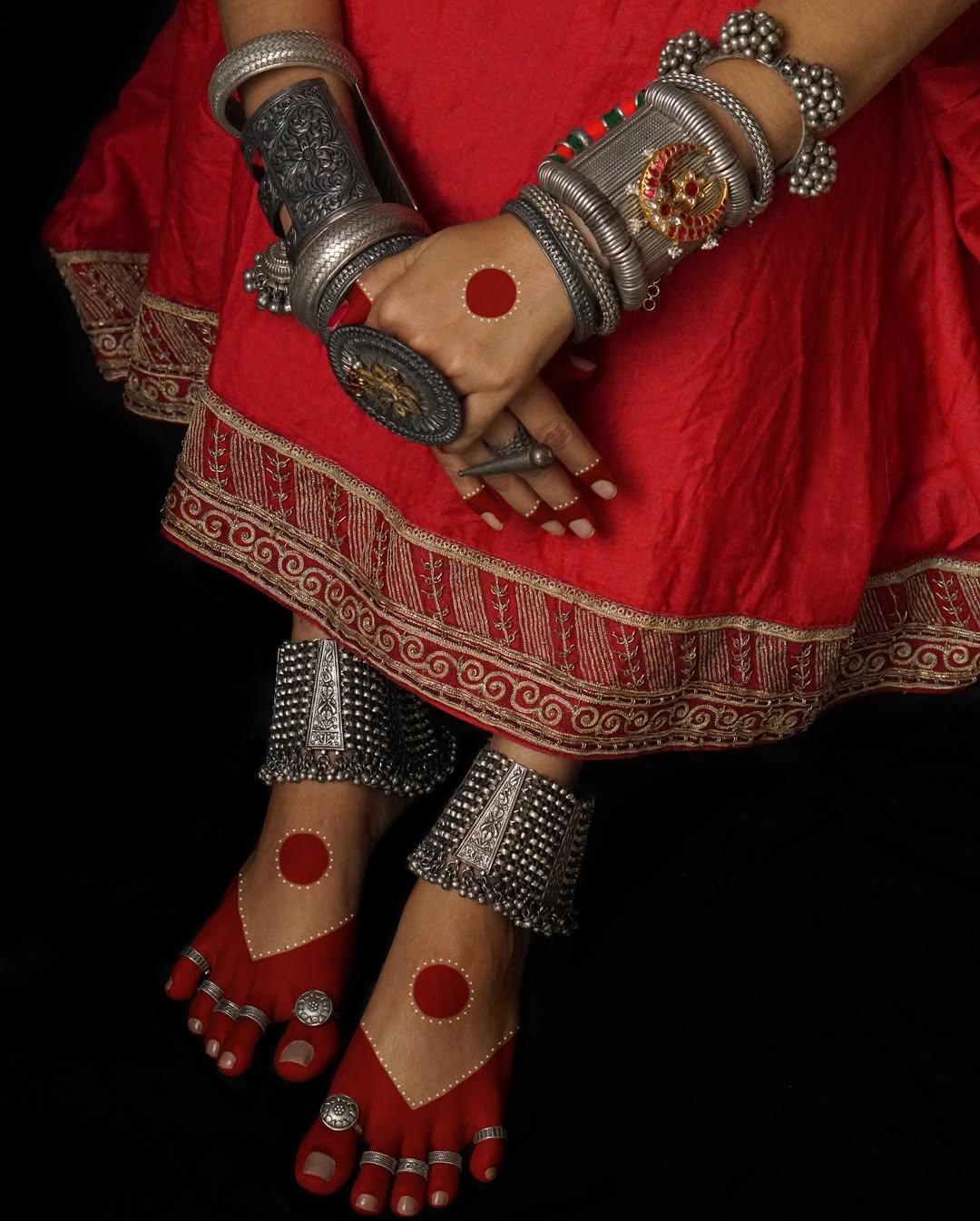
Tarang also explains that each of the different motifs found traditionally in toe rings are all symbolic for something different, which he finds incredibly beautiful. He points out that floral motifs symbolize beauty and nature, geometric designs symbolize balance and symmetry, in certain regions toe rings have Celtic knots, which symbolise eternity and interconnectedness. In India, we often find toe rings with peacocks and birds, symbolising grace and beauty. Additionally, motifs like Om or Swastika are also seen on toe rings, which hold a spiritual significance. “All of these motifs not only enhance the aesthetic appeal but also connect the wearer to rich cultural traditions and beliefs, making each toe ring a meaningful statement.” Tarang expresses.
Jewellery designer Sunita Shekhawat also has profound beliefs about the Bichhiya. Not seeing them as just pieces of ornaments, she, too, believes that they convey something deeper. “Toe rings carry generations of tradition, symbolising love, commitment, and the richness of Indian heritage,” she explains.
While toe rings continue to grace the feet of women even today, one can only guess how far back their origin lies. In the 18th century, English painter Francesco Renaldi created a painting of a Mughal woman, who, amongst other beautiful jewels, was seen wearing toe rings in each of her toes. While the identity of the woman remains a mystery, one can assume that the history of the ornament might date as far back as time itself.
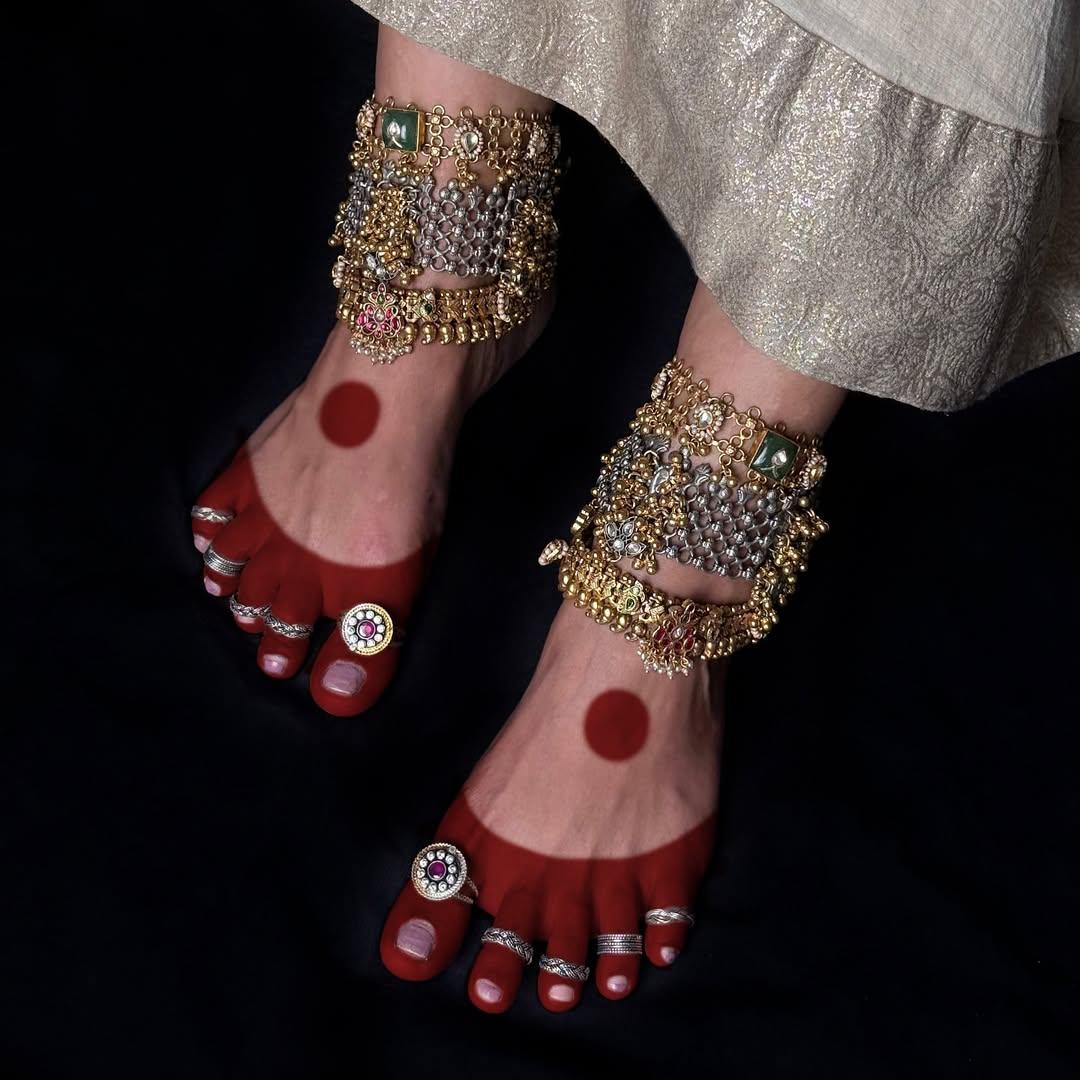
What’s poignant is that Bichhiya, despite all its rich history and heritage, might soon be a tale of the past. When was the last time we saw a bride wear a toe ring, after all? Sunita Shekhawat feels that it is imperative that we preserve the dying tradition of wearing toe rings, lest we lose out on a piece of our culture. “Preserving this tradition is important as it connects us to cultural heritage and carries a deep symbolic meaning, especially in marriage. Keeping the custom alive helps honour our roots,” she adds.
Today, brides might feel a disconnect with toe rings but honouring your cultural heritage as a bride by adding sweet little details to your wedding look that represent where you come from, will never not be cool. Twenty years from now, when you are going through your wedding pictures with your kids, you might not be able to justify why you went for sneakers with your lehenga, but toe rings will still not warrant an explanation. They will have aged well.

Where we give you a fast-paced look into everything you should wish list when you start to think about marriage. What to buy and how to dress, along with modern mithai and the homegrown fragrance makers to bookmark. Make special note of the feature on alta.

It has everything you need to make your wedding special. From the big comeback of red and pink in bridal wear to how the cool kids are wearing corsets to the celebration, there is only one way to get ready for a wedding —with enjoyment.

This section is a building block, a step to a better life. A place where we have all the answers. Or at least the beginning of a great conversation.

This needs very little description. It has travel with a special focus on incredible India, and a collection of wedding albums, sourced randomly, but collected with abundance because happiness has no limits.
