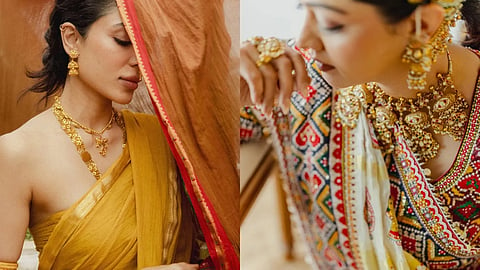

Before bridal jewellery became trend-driven, it was deeply tied to their place of origin, tradition, and identity. Across India, every region developed its own jewellery language shaped by local craftsmanship, rituals, materials, and cultural influences passed down through generations. These pieces were never just decorative. They marked celebrations, symbolised heritage, and carried stories of family, community, and belonging.
Today, even as bridal fashion has become increasingly contemporary, traditional Indian jewellery styles continue to hold their place at the centre of bridal styling. From the pink enamel work of Varanasi’s meenakari to the sculptural grandeur of Tamil Nadu’s temple jewellery, these regional crafts continue to influence how modern brides approach jewellery. Whether worn as heirlooms or reinterpreted through modern styling, they bring a sense of cultural continuity to the bridal wardrobe.

Gulabi meenakari is one of the most recognisable traditional Indian jewellery styles, known for its signature pink enamel work on gold. Originating in Varanasi, this technique involves fusing coloured enamel onto metal to create delicate floral and ornamental patterns. The soft yet detailed finish makes meenakari jewellery a popular choice for brides who want to introduce colour into their bridal look without overpowering it.
Thewa jewellery from Rajasthan is known for its intricate gold work fused onto coloured glass. Each piece often features detailed motifs inspired by royal life, folklore, and nature. This traditional jewellery style stands out for its storytelling quality and rich visual appeal, making it ideal for bridal looks that lean towards heritage-inspired statement pieces.
Cuttack’s silver filigree jewellery, also known as tarakasi, is crafted using ultra-fine silver wires twisted into lace-like patterns. This traditional jewellery technique creates pieces that are lightweight yet highly detailed. Filigree jewellery is often chosen for its intricate appearance and versatility, offering a refined option for both bridal and occasion wear.
Hupari silver jewellery from Kolhapur is known for its handcrafted finish and durability. Created by skilled artisans, these pieces often feature traditional motifs like Koyna (mango-shaped), Pankha (bird wings), Topi (hat-shaped), Shankh (conch), and Pari (coral-inspired) engraved in a slightly heavier structure. This traditional jewellery style appeals to those looking for jewellery that combines everyday wearability with heritage craftsmanship.
Hyderabad lac bangles are a staple in traditional Indian bridal jewellery. Made by moulding heated lac and decorating it with stones and embellishments, these bangles are vibrant and festive. They are typically worn in multiples, adding colour and movement to bridal looks and remaining an essential part of wedding traditions in many regions.
Axomiya gohona refers to traditional Assamese jewellery, usually crafted in gold and defined by bold, structured motifs. Designs such as the crescent-shaped junbiri and floral patterns are commonly seen. This jewellery style is known for its strong visual identity and is often used as the focal point in bridal styling.
Temple jewellery from Tamil Nadu is one of the most iconic traditional Indian jewellery styles. Originally created to adorn temple idols, these pieces feature motifs of gods, goddesses, and temple architecture. Typically crafted in gold, temple jewellery is widely worn by South Indian brides and remains synonymous with traditional bridal styling.
Tribal jewellery from Odisha is crafted using brass and bell metal through traditional casting techniques. These pieces are known for their bold, earthy aesthetic and handcrafted finish. Often worn by indigenous communities, this jewellery style offers a distinct alternative to more polished and ornate bridal jewellery.
Agate jewellery from Khambhat, also known as Cambay, is one of the oldest jewellery traditions in India. Artisans shape, dye, and polish agate stones to create beads and ornaments. With their natural tones and smooth finish, agate pieces are often chosen for understated and minimal bridal styling.
The dejhoor is a traditional piece of Kashmiri jewellery worn by brides, particularly in Kashmiri Pandit weddings. It is characterised by its elongated, geometric form and is typically suspended from the ears. This jewellery style holds deep cultural significance and continues to be an essential part of bridal traditions in the region.
Dhokra jewellery from Madhya Pradesh is crafted using the ancient lost-wax casting technique. Made primarily in brass, these pieces are known for their textured surfaces and handcrafted appeal. This traditional jewellery style stands out for its raw and artisanal aesthetic, making it a unique addition to contemporary bridal jewellery.
Traditional Indian jewellery styles continue to influence modern bridal trends in ways that go beyond aesthetics. Rooted in region and culture, these jewellery traditions bring depth, identity, and meaning to bridal styling. As fashion evolves, these crafts remain constant, proving that heritage and modernity can coexist seamlessly in the world of jewellery.