
India has a wide spectrum of beliefs, from across its states, and people believe in the most unique set of ideas. While some of them are deeply rooted in the rich history and tradition of the Indian subcontinent, others take their origins from Indian mythology. And when it comes to weddings, these beliefs become an amalgamation of rituals and traditions passed down through generations.
Indian weddings are not just a union of two people but go far beyond the sacred chants and stunning extravaganza. If you look closer, you will find a world of fascinating customs and superstitions or faith hidden in plain sight that add depth to the celebrations. All of these unique beliefs reflect the rich cultural and spiritual fabric of the country. Here is a closer look at some of the most fascinating and distinct wedding beliefs from across India.

Although followed pan-India, this belief is most popular in the northern and central parts of the country amongst Hindus. These 16 days in September or October, known as Pitru Paksha, is observed as a time to honour ancestors and are considered to be highly inauspicious for weddings or any kind of new beginnings. It is believed that the souls of the departed ancestors visit the earth during this time and must not be distracted with celebrations. This is a time when temples avoid marriage ceremonies and pandits decline wedding dates.
In South India, Maharashtra and Gujarat, people tie fresh mango leaves in bunches, also known as toran and hang them at the entrance of the home or wedding venues. More than just decorative, these are believed to absorb all the negative energy in the environment and welcome Lakshmi, the goddess of prosperity. These leaves are chosen carefully, especially in Telugu and Tamil households, and replaced regularly through the wedding functions to keep the energies pure and positive.
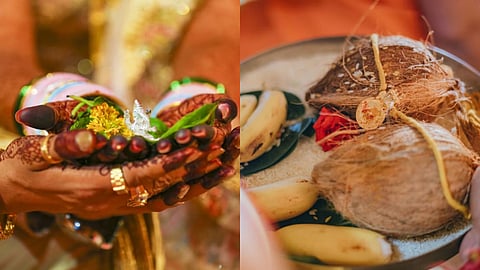
Coconuts are considered sacred and are used in many wedding rituals. But in Gujarat and the coastal regions of India, they hold a more significant value. During weddings, how a coconut breaks is believed to be a sign from the divine. While a clean split is considered auspicious, a messy break is believed to be unlucky. Additionally, in some communities, the groom is asked to break a coconut before stepping into the mandap as a symbol of strength and destiny.
A very Bollywood belief with roots deep in the Indian tradition, this is noted mostly in Punjab. These beliefs blend ritual and fun as the bride, after adorning her bridal ensemble, shakes her hands over the heads of unmarried cousins and friends. And if a kalira falls on someone, they are believed to be getting married next. Part fortune-telling, this belief is seen as a joyful mischief between sisters and friends.
In Bengali and Assamese weddings, the bride is gifted a decorated fish, sometimes even a pair of live ones, as part of the pre-wedding rituals as symbols of fertility and abundance. In some customs, the way the fish move is also believed to be read like an omen.
While wedding beliefs across India are all very interesting, Parsi wedding customs and beliefs stand further out as they include deeply symbolic rituals. One such example includes tying seven threads around the couple by the priest in order to tie their destinies together. These threads are believed to represent the seven Amesha Spentas (divine beings in Zoroastrianism) and are meant to bring spiritual strength into the marriage. In addition, if the threads are left before the ritual ends, it is considered unlucky, and great care is taken to ensure that they don’t break.
Another unique and interesting ritual, followed in some tribal communities of Nagaland, includes demonstrations of the groom’s strength and commitment towards the wedding. Among the Sumi Nagas, the groom is asked to present a wild animal, often a pig or a type of buffalo, as a gift to the family of the bride. In ancient times, this ritual involved actual hunting to prove that the groom could provide for and protect his new family. Meanwhile, in Ao Naga weddings, there is a tradition where the bride is chased during festivities to reflect courtship and camaraderie
While some of these beliefs may seem offbeat if you look at them through a modern lens, all of these make Indian weddings such rich tapestries. Often a blend of fun and tradition, these beliefs are now taking shape according to the changing times yet are valued just as much.