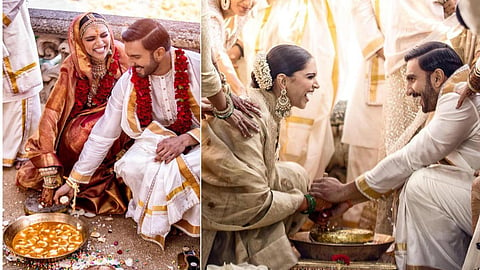

Indian weddings are known for their extravagant celebrations, their grandeur and the richness of their rituals and traditions that are deeply rooted in the depths of the cultural history of the country and the various states. Every Indian wedding is not just a line-up of ceremonies but a story of its own. Everything from the decor to the ensembles that are worn during an Indian wedding has deep symbolism.
Now, imagine getting married with the most unique or even rare rituals that your friends have never even heard of. Indian weddings are full of surprises, and oftentimes these surprises come in the form of the various rituals tucked away in regional cultures. These rituals- a reflection of one’s background and history- are not just quirky but sometimes poetic and even downright dramatic. Nonetheless, these rituals make up the soul of all the grand Indian wedding ceremonies.
A sun-kissed blessing, Mathkor is practised in Bihar and is performed as part of the pre-marital ceremonies, also known as the Maado rites, performed by the bride’s family. The subject of the Mathkor ceremony is the bridegroom, with his head bearing the weight of not flowers but other symbolic offerings like rice and fruits. It signifies blessings and represents the family’s acceptance of the groom as the newest member.
Mathkor is not a very popular ceremony and is very rarely witnessed in the mainstream wedding festivities, but it symbolises a deeply emotional touch that connects families across generations.

This Gujarati game of chance is not so rare anymore, popularly played between newlyweds. This is a welcome game where a bowl of water mixed with milk and vermilion hides a coin and a ring at the bottom. You will remember it from all the popular hindi TV series with wedding sequences.
The couple is to use their right hand and retrieve the ring from the bowl. Whoever finds the ring within four or seven rounds is deemed the ruler of the household. This fun, competitive game sets a light-hearted tone for the beginning of the couple’s new phase in life.
A dramatic mock pilgrimage ritual in Tamil Nadu, this tradition is practised by Tamil Brahmins where the groom dresses like a sanyasi with an umbrella and a walking stick and barefoot slippers and withdraws from the marriage to go on a journey to Kashi.
This is a playful ritual between the groom and his father-in-law and the father-in-law- the bride’s father is to intervene and convince the groom to get maary and persuade him into the family life. The groom is to then agree and embrace the marriage, a symbolism for the groom choosing Dharma over his will to renounce the world.
A ritual popular in Maharashtra, the Madhuparka ceremony is another welcome ritual where honey-curd and sometimes in ghee is poured over the hands of the groom by the bride’s parents. It also involves the bride’s parents washing the groom’s feet, after which they offer the honey-curd (ghee) mixture to the groom, which he sips and scatters into the four directions- North, West, East, South- for the longevity of marriage.
A symbolic ritual that promises sweetness and prosperity in the marriage, it is a sweet invocation. In the cases where the bride’s parents have another son-in-law, the ritual includes too.
Bengal’s lesser-known ritual, Laajahom, also spelt as Lajahom, is a ritual that is performed during the sacred fire ceremony, where the bride’s brother or father, or closest male relative, helps the bride give puffed rice offerings into the fire. The bride's hands are supported by the groom’s hands as she offers the puffed rice into the flames during the ritual.
The couple then circles the fire together, seeking blessings from the god of fire. The ritual is a symbol of shared responsibilities and the support that the couple has to give to each other through this phase of their lives together. It also reflects the coming together of two families.
If it were a competition, Chhattisgarh would probably win it for the most offbeat wedding rituals with the onion hunt tradition. A quirky but rare post wedding ritual, onion hunt is a light-hearted game where onions are hidden for the new bride to search for them as everybody gathered at the venue cheers for her.
Often backed by local beliefs stemming from folklore and mythology, this ritual is believed to ward off evil or ill energies and bring abundance and fertility into the couple’s new beginning. A fun-filled game brings the wedding ceremonies to an end, marking the beginning of the couple’s new life as man and wife.
With India’s diverse palette, these offbeat rituals offer more than just fun-filled ceremonies. They pose for a careful blend of folklore and symbolism deeply rooted in our Indian culture. With a narrative that goes way beyond the years that we can count today, these rituals are believed to bring prosperity and abundance into the lives of the newlyweds and their families that now come together.