
- Avarna Jain,
Chairperson RPSG Lifestyle Media
Manifest Spotlight: Luxury Sweet Maker Dipti Sawalka
From nostalgic mithai to luxe plating, Dipti Sawalka transforms desserts into unforgettable wedding experiences with Gourmet Design Company and Varak.
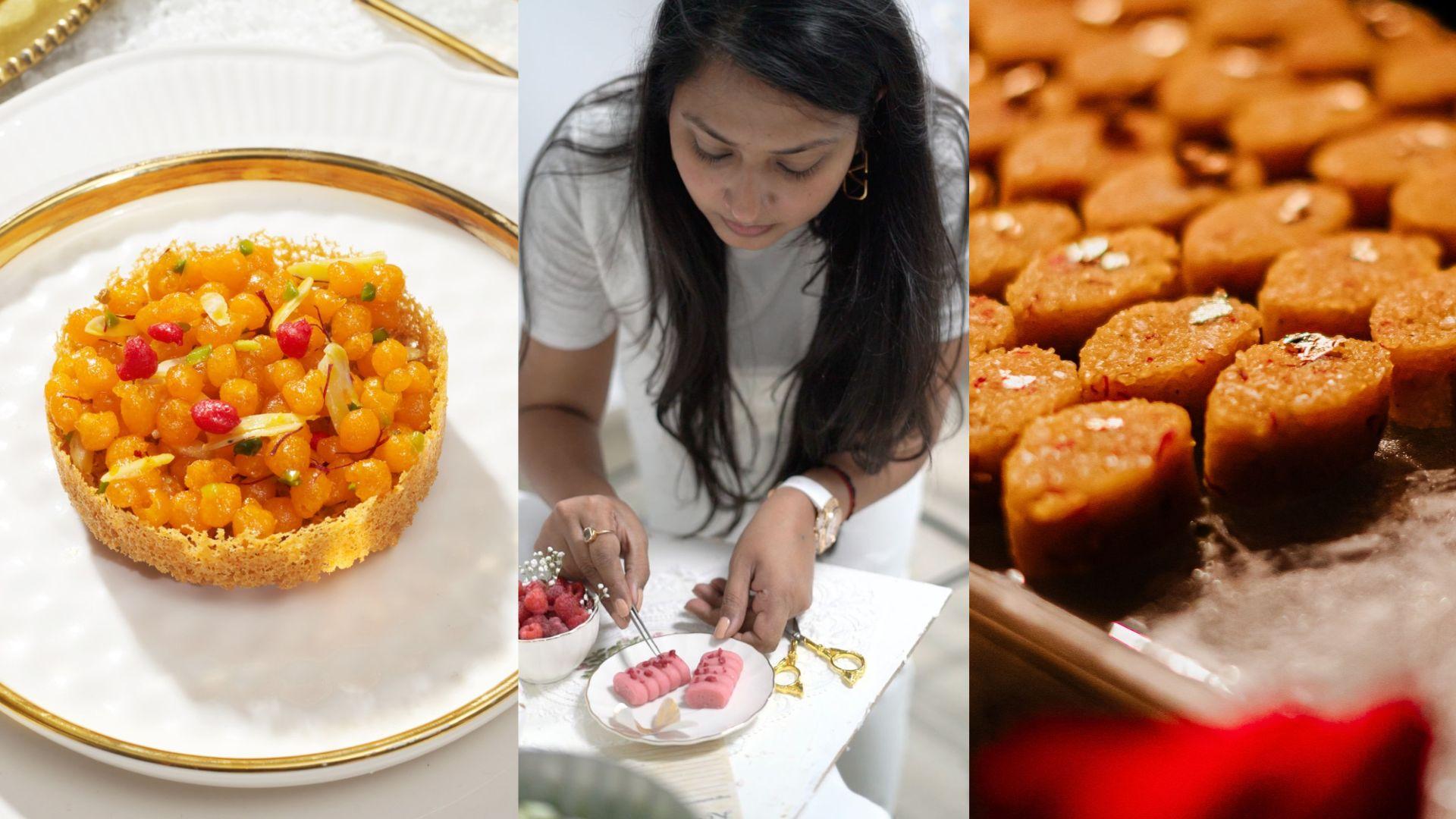
Dipti Sawalka seeks to redefine luxury dining Varak, blending nostalgia and artistry into unforgettable dessert experiences.Dipti Sawalka and team
Entrepreneurship goes far beyond simply starting businesses: it has a certain aura of magic that can give life to ideas, and in the contemporary world of luxury, Dipti Sawalka has mastered the art of turning food into an unforgettable experience. Believing that food must be more than just a meal, Dipti, an engineer-turned-entrepreneur, a national-level swimmer, and an aesthete at heart, decided to bring not only creativity but also a lot of soul to the table.
Through her brands, Gourmet Design Company and Varak, she seeks to redefine luxury dining with immersive menus. She has collected inspiration from India’s tiniest home cooks to the world’s finest restaurants to bring her brainchild to life with her creative menus, artful plating and a dash of theatre. Varak, her artisanal mithai brand, is as much about nostalgia as it is about innovation, as it gives age-old recipes a chic and global spin.
Dipti’s curations have made their place on global platforms, from Dubai Expo events to the most high-profile weddings. Her work is a careful blend of design, storytelling, and conscious sourcing. Having been awarded "Catering Company of the Year," she even garnered global recognition at the SHE Inspires Awards. Dipti is not just about food; she is about transferring legacy.
In Conversation with Founder, Gourmet Design Company & Varak, Dipti Sawalka

Dipti Sawalka brings soul and storytelling to desserts, transforming mithai into luxe, experiential creations.Dipti Sawalka and team
Manifest: What led you to the world of food and design? How did your time exploring India’s smallest kitchens and global fine dining influence your approach to culinary experiences?
Dipti Sawalka: My journey into food and design is deeply rooted in my upbringing. I was raised in a family where cooking traditions were treasured and passed down through generations. Food was always the centrepiece of our gatherings, a powerful medium that brought us all together and sparked exciting conversations. These moments taught me that food is far more than just sustenance; it is a language of emotion and memory.
As I grew, exploring kitchens across India, both large and small, was a pivotal experience. It helped me understand how flavours are brought to life on a grand scale and revealed the subtle stories each dish tells through its nuances, whether it is khatti, meethi, or teekhi. On the other hand, my global experiences opened my palate to international ingredients and techniques. I also noticed a gap in the way food was often presented in a global setting, which sparked my passion for elevating the visual experience. The common thread in all these explorations was the discovery that every dish has a narrative. Once you lock into that story, you can create something truly unforgettable.
M: What inspired you to create Varak, and how did your connection with mithai and memory influence its inception?
DS: Growing up in Bengal, Indian desserts have always held a special place in my heart. The region has a rich legacy of Chena mithai artisans and the smallest of Mishti shops, which skillfully churn out the most scrumptious sweets. These traditional treats, such as rashogullas and fresh Nolen Gur Sandesh, were a significant part of my childhood and are deeply connected to my nostalgic memories. My travels later exposed me to the world of desserts in a completely different way. Varak was born from the excitement of bringing these global interactions and my lifelong love for Indian sweets together into a new, unique form.
M: Varak is rooted in the legacy of Bengal’s sweets but shaped by French pâtisserie. How did you arrive at this unique fusion?
DS: This is a pretty interesting story. The very first idea of creating Bengali sweets with a French twist was born during a conversation with a friend at a Parisian cafe. We were discussing the immense international potential of Indian desserts and how their presence was largely missing from the mainstream. That’s when I envisioned Indian sweets to hold the same space as global patisserie and saw an opportunity to change the narrative and make them appeal to a younger, well-travelled audience. We achieve this by combining two distinct culinary disciplines. We rely on the craftsmanship of our skilled halwais to ensure our recipes retain their authentic taste. At the same time, we draw on the artistry of French patisserie to refine the visual presentation, elevating each sweet to a new level of sophistication. This approach celebrates our heritage through a contemporary lens.
M: Could you share a personal favourite — a dessert that holds a special story or memory?
DS: Jalebi is one Indian dessert that is universally cherished, and it holds a special place in my heart. I have early memories of birthdays that began with a breakfast of fresh, hot jalebis and samosas, a combination that holds immense nostalgic value for me. Even today, weddings feel incomplete without the traditional muh meetha aspect, which is often done with saag and jalebi.
This cultural significance inspired our Seedhi Jalebi. We took the phrase "as straight as a jalebi" literally, reinventing the traditional spiral shape. We infused the batter with the light, crispy texture of a churro, then dipped it in a rich sugar syrup. This modern take on a timeless classic is served with Kesariya Rabri and finished with a delicate gold Varak, creating a unique and luxurious experience that is deeply rooted in tradition.
M: How do you approach designing menus for milestone events like weddings or summits — what’s the starting point?
DS: Our starting point is always to understand the unique essence of the event. The menu and styling of our offerings are a direct reflection of the celebration's type, theme, décor, and the guests' age group. By taking the time to understand the event's narrative, we can ensure the food is perfectly tailored to the occasion.
For a more traditional celebration like a Haldi ceremony, we would stick to classic flavour profiles and styling. In contrast, for a cocktail evening, the menu is curated with more universal tastes in mind, and the presentation is elevated to a fine-dining, plated experience. This bespoke approach ensures that the culinary aspect complements the overall experience, whether it's a grand wedding or an intimate summit.
M: What kind of insights do you gather from brides, families, or planners before curating a gifting experience?
DS: Before curating a gifting experience, we focus on understanding the couple’s tastes and vision. We gather insights on their favourite flavours and the types of desserts they enjoy, which allows us to add a truly bespoke element. We also consider the season of the gifting to incorporate seasonal ingredients, such as nolen gur, and we discuss any colour stories or personalisation details they may want, like adding the wedding logo to the dessert or packaging.
A key part of our process is conducting a tasting experience, where we help them identify their preferred flavours. This collaborative approach allows us to create a deeply personal gift. For a destination wedding, we might even incorporate local tastes from the city into some of the offerings. For example, for a couple who adored pistachios, we designed a complete range of gifting options dedicated to that specific ingredient.
M: Could you walk us through the process of designing a Varak gift box for a high-profile wedding?
DS: Designing a Varak gift box for a high-profile wedding is a detailed, collaborative process. It begins with a dedicated tasting experience, where the couple can indicate their preferred tastes and dessert types. This is followed by a thorough curation of the Varak selection and the overall gift box design, which we craft to their specific requirements.
Storytelling is a vital part of this process. We work closely with the couple to create a narrative, whether it's a modern or traditional feel, and select tastes that hold a certain significance or symbolism to their journey. This allows us to create a truly bespoke gift. For the Anant and Radhika wedding, for instance, we designed a one-of-a-kind "exit experience" where guests could personally choose their favourite sweets to be boxed as a memorable takeaway.
M: Many of your offerings reinterpret traditional sweets like khaja, gulab jamun, and halwa in entirely new formats. How can one balance nostalgia with luxury in the context of gifting?
DS: Our brand's ethos is "Nostalgia Redefined." We believe that true luxury lies in a one-of-a-kind visual experience that complements the authentic tastes one grew up with. We balance the two by creating a rich amalgamation of classic recipes, top-quality ingredients and ultra-modern, luxe presentation styles.
The key to this balance is the meeting of tradition and modern craftsmanship. All our sweets are made by skilled halwais who have travelled from their native hometowns to handcraft the original recipes. The presentation, however, is uniquely crafted by our French pastry chefs. This dual approach allows us to transform nostalgic Indian tastes into truly aspirational and luxurious desserts, perfectly suited for gifting.
M: Varak has been part of some iconic celebrations, from the Ambani wedding to Parineeti Chopra’s. What are some challenges and thrills of designing for weddings at that scale?
DS: Designing for iconic celebrations is a uniquely challenging yet thrilling experience. The main challenge is catering to a discerning clientele with well-travelled palates who have experienced tastes from all over the world. This challenge, however, is also the biggest thrill, as these clients truly appreciate authentic flavours and the skilled craftsmanship of our artisans.
To meet these high standards, we focus on exceptional quality and a bespoke Varak touch. We use only the finest ingredients, such as Kashmiri saffron and Peshwari pistachios, and produce all our desserts freshly on the day of the event. Live stations allow us to finish and plate our offerings with finesse, ensuring maximum freshness. While logistical challenges like limited kitchen space and restricted movement are common at such large-scale events, the reward is seeing esteemed palates appreciate our unique fusion of traditional tastes and innovative presentation.
M: What makes Indian mithai such an integral part of wedding celebrations, and how is Varak reimagining that experience for a new generation?
DS: Indian mithai is an integral part of wedding celebrations because it symbolises joy and auspiciousness. Traditionally, certain desserts are a necessary part of rituals and offerings, without which a festivity would feel incomplete. Sweets such as ladoo, halwa, and jalebi are deeply woven into the fabric of our culture, both in India and within Indian families across the world.
Varak reimagines this experience for a new generation by honouring the traditional while elevating the aesthetic. We use only the highest-quality ingredients and stay true to age-old recipes, ensuring the taste remains authentic. We then present these desserts with the finesse of French patisserie, transforming them into visually stunning creations. This unique approach appeals to a modern audience that seeks a dessert experience that is both true to its heritage and worthy of a grand celebration.
M: How do you approach wedding collaborations differently from your everyday offerings, whether it’s plated desserts, curated boxes, or live counters?
DS: For every wedding, we start with a clean slate to create a truly bespoke experience. We delve into the soul of the event and design a menu based on its specific theme and vibe. For instance, a "borough market" theme would inspire offerings that transport guests to an authentic food market. This tailored approach is evident across all our offerings.
For live counters, where we add interactive elements to captivate guests, such as torching our cream batons, with every detail from the display to the serving vessel given emphasis. With plated desserts, we add personalised touches like incorporating the wedding logo on a chocolate coconut shell. Our curated boxes allow couples to tell their own story, whether by selecting their favourite sweets or by creating a destination-themed hamper, such as a Kolkata-themed box with nostalgic offerings.
M: What is the most unusual or memorable wedding brief you’ve worked on so far?
DS: The most memorable brief we've worked on so far was for the wedding of Anant Ambani and Radhika Merchant. It was a true honour to be asked to create an Indian dessert experience that would stand parallel to Porte le Chabot, one of the biggest names in French desserts. This was a brief that was both challenging and incredibly rewarding.
The core objective was to present Indian tastes in a uniquely young and artisanal way, capturing the essence of Brand India. The brief called for a dessert experience similar to those found on the most prestigious international platforms, where every offering is presented in an experiential form. It was a fantastic opportunity to showcase how Indian sweets can be reimagined for a global audience with the same sophistication and finesse as their international counterparts.
M: Today’s couples are seeking personalisation and innovation in every aspect of their wedding. How does Varak cater to that desire through its dessert experiences?
DS: Varak caters to the desire for personalisation by focusing on the unique story of each couple. We encourage them to curate dessert boxes and menus based on their favourite sweets and tastes. This includes incorporating subtle, personal details like a wedding logo on a plated dessert or creating a themed gift box that reflects their story or the wedding's destination, such as our gold-leaf-coated Dry fruit sandwiches for a wedding in Abu Dhabi.
For innovation, we transform the traditional dessert experience through both presentation and interaction. Our live counters, for example, feature interactive elements and fresh finishing touches that captivate guests. We also innovate by using unique serving vessels like bamboo boats and by reimagining traditional sweets, like our redesigned modaks, to create something entirely new and exciting. This ensures the dessert experience is memorable and distinctly personal to the couple.
M: Design plays a key role in your work — from flavour profiles to the visual finish of each mithai. Where do you draw inspiration from?
DS: Inspiration for our designs comes from a wide range of sources, from the expected to the most unexpected. We find creative ideas everywhere, from bustling food markets and chic cafes to the simplicity of a temple offering. This allows us to continuously innovate by combining cherished tastes in unique ways or by changing the presentation style of traditional sweets entirely.
For example, our Khaja Mille Feuille was inspired by the chappan bhog of Jagannath Puri. We reinvented the traditional fried dough into delicate petal-shaped crisps, which are then layered with date-palm jaggery rabri to create a sophisticated sweet. Similarly, the Boondi Ghewar Tart was born from a Rajasthani taste for boondi and bhujia, which we reimagined into an elegant tart. We have also drawn on global influences, like combining Lebanese kunafa with a classic gulab jamun to create our Nested Gulab Jamun in a unique format.
M: What advice would you give to brides and grooms looking to make their wedding desserts truly unforgettable?
DS: For brides and grooms, my advice would be to view the dessert experience as an integral part of your wedding's narrative. Every celebration has its unique vibe and story, and the culinary offerings should be an extension of that. By focusing on storytelling and personalisation, you show your guests that immense care has been taken in every selection.
A gourmet dessert experience makes a significant contribution to the overall "experiential quotient" of a party. It should be as well-thought-out and beautifully designed as the décor and the theme. When the desserts are infused with a personal touch and are meticulously crafted to be both visually stunning and delicious, they will not only delight the palate but also create lasting memories for you and your guests.

Where we give you a fast-paced look into everything you should wish list when you start to think about marriage. What to buy and how to dress, along with modern mithai and the homegrown fragrance makers to bookmark. Make special note of the feature on alta.

It has everything you need to make your wedding special. From the big comeback of red and pink in bridal wear to how the cool kids are wearing corsets to the celebration, there is only one way to get ready for a wedding —with enjoyment.

This section is a building block, a step to a better life. A place where we have all the answers. Or at least the beginning of a great conversation.

This needs very little description. It has travel with a special focus on incredible India, and a collection of wedding albums, sourced randomly, but collected with abundance because happiness has no limits.
