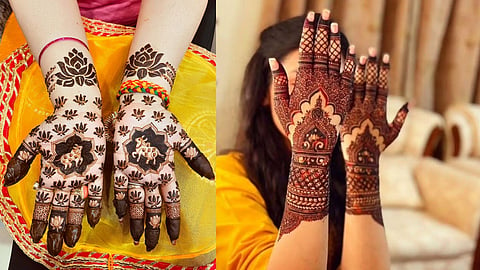
Whether it was portraits of pets or the couple’s love story rendered in henna, mehndi trends in 2024 were all about personalisation. But what about the upcoming wedding season in 2025?
“In 2025 we will see designs that largely focus on traditional art forms,” says bridal mehndi artist Usha Shah. Brides are more keen on implementing elements of their culture in their mehndi designs that help them feel connected with their roots.”
We spoke to mehndi artists from around the country to narrow down five major trends that we’ll see everywhere this wedding season. Take a look…

The Pakistani henna art patterns are all about precision. The design’s motifs are generally intricate and include patterns that feature florals and spirals fused with geometric lines that bring the entire art together.
“The Pakistani design has slowly started to gain popularity because brides have started to realise the effort that goes behind it and the results it brings. Yes, you will have to sit for hours to get it right, but the end result is worth the wait,” says Surat-based bridal henna artist Harin Dalal.
While they have their similarities, don’t confuse this distinct mehndi design with the ever-popular Arabic one.
“Although the Pakistani henna design and the Arabic mehndi pattern may seem similar because of certain elements like floral motifs and geometric lines that are common between the two, you can notice the basic difference on viewing keenly the two which is the spacing between the designs,” says Harin Dalal, “The Arabic henna design is more spread out with ample space between the motifs whereas the motifs in Pakistani henna are smaller and the spacing between the whole design is comparatively lesser which sometimes makes it difficult for the viewer to perceive the design as a whole.”
Inspired by the local Pichwai art of the Marward region of Rajasthan, the Pichwai mehndi designs are going to be big in 2025 These designs typically depict the life of the Hindu God Krishna and his early life in Gokul. The design patterns usually include elements of the god’s life like cows, cowherds, lotuses, elephants, flutes, conches, milkmaids and peacocks.
“Earlier it was only the brides of Rajasthan and Gujarat who used to opt for the Pichwai art pattern, but nowadays its popularity is increasing,” says mehndi artist Sona Mistry. “As the Shrinathji shrine dedicated to Lord Krishna has great significance in the Gujarati and Marwadi culture, brides from this region only, previously used to opt for this design. But in 2024, this design has slowly become popular among nature-loving brides and couples opting for open-air wedding venues as the artwork has a lot of nature-centric elements like flowers, trees and animals which resonate a lot with their personality, preferences and style.”
The abstract henna pattern brings together multiple elements like shapes, flowers and lines together without much thought or detail. For brides who wish to depict their feelings through Henna without giving it much thought, the abstract art pattern is the way to go.
“The abstract henna pattern gives the brides and the henna designer a way to express themselves,” says mehndi artist Anjum Kousar, “For brides who are free to experiment and want to bring out bits and pieces of their total personality without adhering to a specific pattern, the abstract henna design works best. It is great to bring forth a balance of traditionalism and modernity and also stick to current trends. As today’s brides are open to experimentation and not shying away from it, this design is one which I feel will be popular in 2025.”
Hexagons, circles, squares or clean crisp lines, the geometric henna design pattern is all about shapes of all kinds and sizes. A go-to choice for brides opting for the minimalistic design, this henna pattern can also be implemented with elements of abstract art like flowers, leaves and spirals to create a new design altogether. A further evolution of the geometric design is the Mandala design which has a mixture of shapes and spirals with even spacing and leaves no room for visual congestion. Remember Alia Bhatt’s minimalistic mehndi? It was a mandala-inspired design. Simple, sleek, stylish and yet traditional.
“For brides who want their design to be sleek, elegant and stylish at once, the geometric art pattern is an emerging favourite,” says celebrity bridal mehndi artist Veena Nagda. “It is also a popular option for brides who wish to opt for a hand jewellery mehndi pattern as it exudes elegance. Sonam Kapoor Ahuja is a big fan of geometric patterns and always opts for these designs for all her functions.”
The Sanjhi art-inspired henna design draws its inspiration from the Sanjhi folk art form of the Mathura region. Like the Pichwai art, this mehndi art design also focuses on the early life of Lord Krishna and has elements like flowers, animals, the Lord and his beloved Radha. The difference between the two is that the designs in a Sanjhi art mehndi design are inked without highlighting their outline which is not the case in Pichwai art mehndi.
“Like the Pichwai henna design, the Sanjhi art pattern is also popular among nature lovers,” says Sona Mistry. “Because of the presence of nature-centric elements and the presence of motifs like decorated horses, camels and mandaps. The Sanjhi art design also has a lot of stories from Hindu mythology and speaks about Indian culture. Nowadays youngsters are opting for designs that help them connect with their roots which is why I feel the Sanjhi art henna pattern is getting popular.”