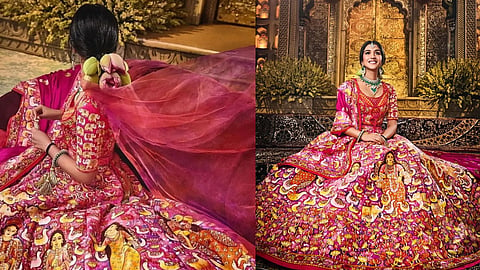

Indian weddings have always been rooted in traditions. From the decor to the rituals, every part of an Indian wedding carries cultural nuances that signify the country's rich heritage. And Indian bridal wear is no stranger to this. With different motifs acting as visual storytellers that embody blessings, tradition and aspirations for the new life, these bridal ensembles hold greater significance. But why are these motifs crafted on a bridal outfit? While from a design perspective these motifs transform the bridal attire into a narrative that reflects love, traditionally they are believed to carry wishes for a prosperous and harmonious marriage. They connect the bride to regional beliefs and the larger tapestry of Indian culture.
These symbols link modern brides to the previous generations through shared cultural language and choosing specific symbols infuses the bridal ensemble with intention. But what do these symbols really signify?

The paisley motif boasts a rich history. First believed to be used in ancient Persia, where the inspiration was drawn from a Cypress tree, regarded as a symbol of life and eternity, this tear-drop shaped design represents fertility and the cycle of life. It has long been associated with spirituality and abundance, and the usage of this motif is believed to establish a sense of balance and harmony with nature. Originally known as buta or buteh, this motif was extensively used in the making of royal garments; however, in the Mughal empire in the 16th century, this motif made its way to Kashmir, India and the skilled artisans began incorporating it onto their shawls. Many cultures believed that this motif resembled a mango, and the paisley-patterned shawls, mostly pashminas, soon became a symbol for luxury.
Later, this motif took over India’s rich textile history and gradually made its way into the bridal ensembles of Indian brides, reflecting a strong belief in its ability to bring abundance in the lives of the brides.
Indian bridal fashion is not just about the style, but history stitched into fabric and culture blossoming in every crease. Several divine symbols have graced the Indian bridal ensemble, but there is one that holds a place like no symbol can: the Lotus. A timeless metaphor for purity, this motif has appeared across eras, in the form of temple carvings, Mughal textiles, royal murals, and even traditional jewellery. The lotus is believed to symbolise prosperity, elegance and spiritual grace, and in contemporary times, this motif flows seamlessly into the bridal couture.
A recurring symbol across Indian tradition, this motif is believed to be a reminder that beauty thrives even in the most difficult times. It symbolises the rebirth of purity, resilience and new beginnings, in a way resonating with a woman’s life after a wedding. In many ways, the lotus mirrors a bride’s own journey: stepping into a new chapter while holding on to her inner strength and purity.
Indian weddings often celebrate brides as Goddess Lakshmi- the goddess of wealth, beauty and abundance, herself who is traditionally depicted seated on a blooming lotus. Therefore, it is believed that when a lotus graces the bride’s outfit, it connects her to this divine imagery. More than decoration, it becomes a blessing, layered with auspiciousness.
Skilled craftsmen have interpreted this meaning through Banarasi brocades, Kalamkari paintings, and elaborate zardozi and dabka work through the ages. The lotus has always carried emotions.
The peacock has been a revered symbol in Indian culture for centuries. A symbol of love, immortality and rebirth, peacock motifs are celebrated for their intricate beauty and cultural significance. And its presence on Indian bridal ensembles is more than just an artistic endeavour. It carries a wealth of symbolic meanings. Peacock references and motifs can be found in ancient texts, often associated with the gods and royalty. In Indian culture, it represents Lord Krishna and his love for Radha and thus its inclusion in bridal outfits signifies the bride’s connection to divine love and her own enchanting presence. It adds a touch of spiritual significance and regality to the auspicious moment.
Indian bridal wear is full of symbols, but when it comes to motifs that bring meaning and charm, the elephant reigns supreme. Rooted deeply in Indian spirituality, the elephant draws its significance from Lord Ganesha, the remover of obstacles and the ultimate symbol of new beginnings. Naturally, that makes it a perfect companion for a bride stepping into a brand-new chapter of life. A symbol of strength, wisdom, good fortune, when elephant motifs appear on bridal lehengas or jewellery, they become cultural talismans, woven with intention and blessings.
For generations, artisans have celebrated this majestic creature through intricate embroidery, temple-style jewellery, meenakari, and gemstone detailing. What makes the elephant motif truly special is its versatility. One moment it’s deeply spiritual, the next it’s delightfully whimsical. In a world of fast trends, the elephant stays.
Another deeply significant motif that is deeply rooted in the culture and history of India and its traditions, the sun and the moon motifs, when worn together, represent the cosmic balance, the harmony between two energies. And when stitched into the bridal ensemble of the bride, it symbolises the eternal love that is shared by a couple and their harmonious union.
The motifs, when broken down, the sun is believed to represent a masculine energy, power and vitality and the moon is believed to be the feminine energy possessing calmness and grace. Together, these symbols signify a love and bond that is meant to last for eternity and bring blessings of the divine into the couple’s union. They are believed to embody prosperity and the capacity for self-control and intuition, which becomes the guiding force for the bride as she begins her new journey
With their roots deep into the ancient traditions that date back 9th to 13th century during the Chola Dynasty where they adorned the crowns of the royalties, these motifs are largely noticed across South Indian jewellery as they were initially part of the temple jewellery that was used to adorn the idols of gods and goddesses and were later worn by the temple dancers who performed sacred dances to honour the deities. In contemporary times, these sacred symbols appear in kalamkari and ikat and are incorporated into bridal wear through embroidery, zari work or handblock prints to symbolise a love that lasts as long as the sun and the moon shine.