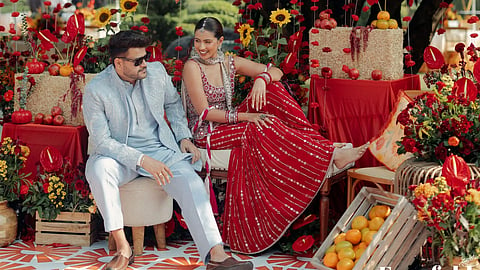

Planning an intimate wedding is an art, a skill that requires precision and a passion for the aesthetics that sit right in the middle of the ceremonies, holding the entire function together. And according to top Indian wedding planners, the beauty of a thoughtfully curated wedding is that they allow you to experience the couple’s big day just as they experience it. Remember, the wedding is as much about the couple as it is about honouring our cultural roots…so do you, unapologetically and wholeheartedly.
Manifest speaks to key experts in the field to break down elements that add a finishing touch to a wedding. And while they enumerate several elements, the one element that ultimately makes or break an event is: the decor of the celebration.
For weddings, emotional impact comes from details that feel personal, not performative. Dakshita Bhatia Gangola shares that at DB Spaces they focus on designing elements that guests interact with closely and remember long after the vows are done and the reels are posted. “When design is rooted in intention rather than scale, the wedding feels effortless and emotionally rich.” According to her, intimate weddings work best when they focus on small, carefully considered experiences,” she says. “A wishing corner with a beautifully designed booklet, a personalised petal bar, or even a simple wishing tree allows guests to participate naturally—without anything feeling staged or excessive.” These elements, she explains, are experiential rather than ornamental. She further shares that thoughtfully personalised table settings have grown to become one of the most intimate touchpoints in a wedding. “Personalised placemats with the couple’s names, a short quote, or a gentle message placed at every seat instantly make guests feel considered. In one of our celebrations, each chair had a customised note resting on the placemat, a small gesture that guests carried with them emotionally.”
Chair details that feel intentional are also details that guests notice in stillness before rituals begin and these details stay with them far beyond the ceremony itself. “A simple vows booklet placed on a chair, tied with a soft ribbon and finished with a delicate bell, creates a quiet moment of anticipation.”
She also adds that during moments like the jaimala, it is often the smallest design elements that elevate the experience. “The way petals are held, how the space is framed, and how movement flows all contribute to a deeper emotional connection without distracting from the ritual.”
A popular trend that Dakshita mentioned- story led photo and memory walls- have been taking over the intimate wedding world. “Instead of generic photo backdrops, we design customised story walls that reflect the couple’s journey. A framed installation that highlights the people, moments, or love stories that shaped the couple before they found each other turns a wall into an emotional anchor. In intimate weddings, guests often see themselves reflected in these narratives, creating a shared sense of belonging.”
According to Dakshita, in intimate celebrations, décor is not about filling space. It is about creating moments of connection, where every detail feels close, intentional, and deeply human.
“At DB Spaces, personalising a celebration begins with understanding the couple’s visual and emotional language.” Dakshita shares that a wedding reflects its story most authentically when décor choices are treated as narrative tools. Tabletop interactions such as customised crossword puzzles, love mazes, or light-hearted games inspired by the couple’s journey make the guests warm up to their world. “These elements allow the guests to actually romance or reminisce about the ceremonies rather than observe it from a distance.”
She believes that subtle branding through initials, shared symbols, or a meaningful hashtag can appear organically within the décor. “These cues are thoughtfully woven into floral arrangements, stationery, or installations and become quiet signatures that guests notice almost instinctively. Food also plays a powerful role in storytelling. A favourite snack, a late-night comfort dish, a customised cocktail, or a culturally rooted food corner adds familiarity and warmth to the celebration.”
Sachin believes that a wedding is a deeply personal moment. “It is not just an event—it is a celebration of the couple and the journey they have shared. For one of the weddings, we brought the story of a couple to life in a truly intimate way. We created a special magazine dedicated entirely to the couple and placed a copy in every guest’s room. It captured everything about them—their first conversations, the Hinge chat that led to the proposal, their favourite music playlist, the outfits they chose and the meaning behind them, and so much more. Our goal was simple: to let every guest experience the couple’s journey, not just witness their wedding day.”
According to Sachin, the joy of a wedding isn’t determined by whether it is large or small. It depends on how genuinely the hosts and guests connect and enjoy the moment. “No amount of grand décor, music, or lavish food can truly satisfy guests unless they feel involved and welcomed.”
Another important advantage is personalisation. Sachin adds that many unique experiences can only be enjoyed with smaller groups. For example, if a couple wants to host a special dinner on a cruise or plan a highly customised activity, it becomes practical and meaningful only with a limited number of guests. Such tailored moments are difficult, if not impossible, to execute on a large scale.
“Ultimately, intimate weddings focus on quality over quantity—creating authentic memories, deeper connections, and truly personal celebrations.”
Aliya Vij of The Wedding Duo believes that there has been a huge change in the wedding market, where people want couples who still want small, intimate weddings. “They want it really well done. The wedding, the time of DIY is out.”
She adds that it's more about paying attention to the minutest details and quality of service because there's just so much information everywhere that people want their wedding to look unique, and she believes that the most beautiful way or the meaningful ways that couples can make their wedding special is by not following unnecessary trends and just doing it their own original way. “The recent wedding that we all saw of Pranay in that fort, where they didn't even have a mandap was just such a unique, original idea. So a lot of people are coming to us like this. We're doing a wedding in Jodhpur currently, where the bride and groom are actually not taking any pheras. We're not creating any mandap, we're creating just an altar and there is no priest, but they are doing a Hindu ceremony.”
She points out that the design elements that work best for small weddings could be something as simple as having your menu printed in a different way or your invite having something personal. They've also done invites which have like seeded paper and you can sew them, guests really remember it. She shares that these elements could be something unique to the couple. “There was a couple who really enjoyed poetry and reading and we had these scrolls of poetry just in this Sangeet as a backdrop and it just came out so beautiful. So, these are the emotional elements that one can pick up for their wedding.”
For Aliya, with a smaller guest list, couples can invest in a more beautiful property, elevated décor, and finer details, rather than spreading the budget thin and doing everything averagely.
Purvi believes that in luxury intimate weddings, meaning is expressed through discernment rather than display. “The most refined celebrations are those where every element feels personal, not overdone. Private vow exchanges, thoughtfully chosen rituals, or moments of quiet reflection with family create depth without drawing attention to themselves.”
For Purvi, in intimate settings, design works best when it supports emotion rather than competes with it. Guests tend to remember tactile, immersive details—soft lighting, thoughtfully arranged seating, personal touches at the table—more than elaborate installations. “A well-composed tablescape, warm candlelight, meaningful objects layered into décor, or stationery that feels personal can leave a lasting impression. These elements quietly shape the mood and make the experience feel considered, not decorative for its own sake.”
She believes that personalisation begins when couples look inward instead of outward. “Rather than asking what’s trending, it helps to ask what defines their relationship—shared memories, family traditions, places they love, or values they hold close” According to her, these answers can naturally inform choices like music, menu, rituals, or even the way guests are welcomed. “When a wedding reflects lived experiences rather than borrowed ideas, it feels deeply personal and timeless, regardless of scale.”
Vedika believes that for intimate weddings, impact comes from intention, not scale. “When the guest list is small, every detail has the opportunity to feel personal. I believe the most memorable elements are those that invite guests into a feeling, not just a pretty setting.” She adds that this could mean post-ceremony bells rung by guests instead of applause, which creates a serene atmosphere.
“It could be handwritten or quirky signboards that reflect the couple’s shared humour or inside jokes, sparking smiles and conversations. Also, food and beverages play a powerful role in memory making. Custom ‘His & Hers’ favourite dishes like pizza or fries boxes, menus designed around favourite comfort foods or playful packaging that makes the experience feel warm, familiar and deeply personal. These are the details guests take photos of, talk about on the drive home and remember years later, not because they were extravagant, but because they felt real.”
Personalisation should feel like an extension of the couple’s life together, not a checklist of trending things. The key is asking ‘What feels like us?’ instead of ‘What looks good online?’
She points out that the one underrated planning decision that can completely transform the vibe of a small wedding is planning the moments, not just the timeline. “ It is giving key moments the same attention they give décor or outfits. For example, if the entry truly matters to you, it shouldn’t be left as a last-minute call. Deciding the song, the pacing, and how you want to walk into your event well in advance allows the moment to feel natural, confident and cinematic.” She shares that the result is far better photos and videos that capture the emotion forever, rather than chaos. When a moment is planned with intention, it shows on camera as a forever memory.
Vedika believes that personal touches are everything that is needed to make an intimate wedding more special for a couple. “When guests encounter a detail and immediately think, ‘Oh, this is so them,’ you've achieved something far more valuable than aesthetic perfection.” She suggests that if a couple is passionate about photography, they should look at weaving their favourite captured moments into the design.
“Love literature? Let meaningful quotes or poetry find their way into signage, menus, or table settings. Have dogs who are part of your family? Find creative ways to include them.” She adds that the possibilities are limitless. “Whether it's your shared love of board games, a favourite film, a sport you play together, or even a meaningful inside joke. These thoughtful incorporations create layers of meaning that linger in memory. They transform your wedding from a beautiful event into an intimate portrait of your relationship, one that guests will recall with warmth long after the last dance.”
