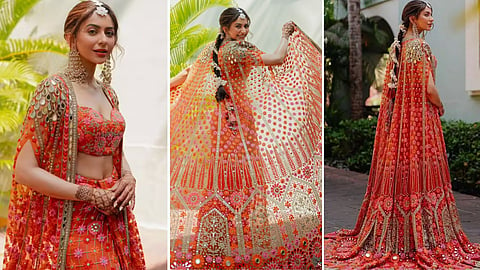
Phulkari, which translates to “flower work,” is one of the most vibrant and symbolic embroidery traditions in India. Originating in Punjab, it was hand-stitched by women on coarse khaddar fabric, often gifted as part of a bride’s trousseau. Each motif carries meaning: flowers for fertility, sparrows for joy, wheat stalks for prosperity. This makes Phulkari less an adornment and more a blessing.
One of its most recognisable cinematic moments came with Anushka Sharma in Phillauri, where her delicate Phulkari dupattas instantly evoked nostalgia and Punjabi heritage. More recently, Rakul Preet Singh’s mehendi look by Arpita Mehta, crafted over 600 hours, showed Phulkari’s couture potential, with a bustier blouse, fitted lungi skirt, and a sweeping cape embroidered in vibrant threadwork and mirrors.

Bollywood celebrities continue to embrace the craft too. Sonam Kapoor wore a statement Phulkari dress, Alia Bhatt styled a traditional dupatta casually with an all black salwar suit and Aditi Rao Hydari in Sukriti & Aakriti's Phulkari Lehenga.
What was once an heirloom has travelled across time and taste. If you’re curating a trousseau or simply want to add a touch of heritage luxe to your festive wardrobe, these designers are making Phulkari feel timeless yet current
Buy it here.
Known for Rakul Preet Singh’s much-talked-about mehendi look, Arpita Mehta reimagines Phulkari with contemporary glamour. Her ensembles feature bustier blouses, lungi skirts, and flowing capes embroidered in toasted hues and mirror accents. She bridges the craft’s vibrancy with silhouettes that feel couture, making Phulkari a modern bride’s statement.
Buy it here.
The designer duo lend a youthful spin to Phulkari, often working it into pastel palettes and easy festive wear. Their shararas, breezy lehengas, and dupattas highlight embroidery that feels light, celebratory, and ready for daytime weddings. It is Phulkari stripped of heaviness, styled instead for the modern young bride or bridesmaid.
Buy it here.
In his Nooraniyat collection, Malhotra spotlighted Phulkari lehengas threaded with metallics and sequins. He transformed the rural heirloom into couture glamour, layering the embroidery with shimmer-heavy fabrics and sweeping silhouettes. Perfect for brides who want tradition wrapped in Bollywood-style drama.
Buy it here.
The couturiers have long championed Phulkari as part of their embroidery vocabulary. One standout moment was Isha Ambani’s wedding festivities in Udaipur, where she wore a minimal phulkari work suit that won hearts for its understated grace. Their pieces often play with oversized motifs and tonal contrasts, marrying heritage stitches with red-carpet elegance.
Buy it here.
Among the earliest designers to revive regional crafts, Ritu Kumar offers Phulkari across elegant suits, kurtas, and dupattas. Her interpretation is more restrained, often in earthy or muted shade,s making it ideal for those who want heritage without maximalism.
Buy it here.
Phulkari finds a couture upgrade in Tahiliani’s work, where it mingles with gota, mirror work, and sequins. His phulkari-inspired pieces feel like a “symphony of summer”, with delicate detailing, layered embroidery, and modern draping. They are perfect for sangeets and cocktail celebrations where opulence meets ease.
Buy it here.
Beloved for their embroidered juttis, Needledust has brought Phulkari motifs to footwear. Vibrant threadwork on rich fabrics turns even casual ensembles festive, while bridal pairs add a heritage flourish to lehengas and shararas. They’re an easy way to wear Phulkari daily.
Buy it here.
For those looking beyond apparel, Jaypore crafts Phulkari onto polti bags and accessories. These pieces are embroidered with bright florals and motifs that add a burst of Punjab’s craft heritage to even the simplest outfit.