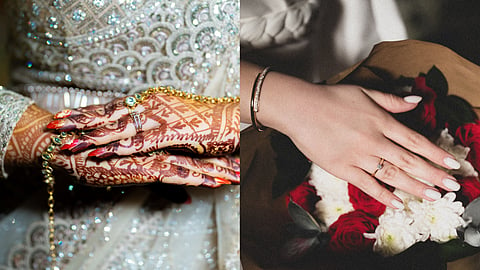

When we think of wedding beauty prep, hair, makeup and skin usually get weeks (read: months) of attention. Nails, however, are often relegated to the very end of the checklist. But a wedding manicure is not quite the same as your monthly trip to the salon. It’s not just about choosing a shape or shade; the state of your nails matters, too. Because the last thing any bride needs—somewhere between getting dressed and saying ‘I do’—is a chipped nail, a broken extension or a cuticle emergency. So we asked a dermatologist and nail technician to break down the ultimate pre-wedding manicure guide.
“Fingernails grow approximately 3mm per month, so considering this, six to eight weeks before the wedding would be ideal,” explains Dr Bandhavi Sane, lead dermatologist at The White Door Atelier. “Nails grow slowly, so meaningful improvement takes time.”
If nails are significantly brittle, peeling or repeatedly breaking, she recommends starting even earlier— 12 to 15 weeks ahead—to allow time to identify and address the cause, whether that’s excessive water or chemical exposure, nail trauma, nutritional deficiencies or an underlying nail disorder.
The early months are less about the perfect polish and more about nail TLC. According to Sousha Lanah, nail technician at The White Door India, brides should start being more mindful of their nails around two months before the wedding. “Don’t skip your monthly manicure appointment, switch from a regular manicure to something more hydrating and nourishing, and support this process with a good cuticle oil or almond oil, and a healthy, balanced diet,” she says.

Before the wedding manicure comes the less glamorous business of getting your nails into shape. Brittle, peeling or uneven nails aren’t necessarily a polish problem; often, they’re the aftermath of too much buffing, picking, soaking or peeling.
“The most common cause is repeated mechanical and chemical trauma,” says Dr Sane. Think detergents, hand sanitiser, aggressive filing and improper removal of gel or polish. Iron deficiency can also contribute to brittle nails, although she cautions against taking supplements without first identifying a deficiency.
And while drinking more water may be good advice generally, it won’t necessarily transform your nails. “Dehydration of the nail plate can increase brittleness, but simply drinking more water does not hydrate the nail from within.” Instead, regular moisturising can help improve the condition of the nail and surrounding skin.
That includes the cuticles, which are more important than they look. “The cuticle is an important part of the nail’s protective barrier, helping prevent irritants and microorganisms from entering the area where the nail grows.” Her advice: moisturise daily with a rich hand cream or oil-based moisturiser, and resist aggressively pushing back, cutting or picking at the cuticles, which can create tiny breaks in the skin and increase the risk of inflammation or infection.
At the salon, Lanah sees the consequences of neglect firsthand. Clients with short nails often have a history of nail trauma from improper removals or nail biting. When there’s enough time, she prefers to address the natural nail rather than simply cover it up. “If I have the time to focus on nail health, I would use products from a gentle care nail range to build their health over time,” she says.
Then comes the million-dollar question: natural, gel, acrylic or extensions? According to Dr Sane, none is necessarily off-limits when you apply and remove correctly. The bigger concern is what happens during repeated applications and removals. Aggressive buffing or peeling products away can leave nails thin, brittle and prone to peeling.
“The biggest problem is usually the removal process rather than the product itself,” she says. There’s also the possibility of an allergic reaction to acrylates, which can cause redness, itching or swelling around the nails. If that happens, stop using the product and see a dermatologist.
For Lanah, the decision comes down to the condition of the natural nail, the desired finish and, crucially, how much time a bride has. When there’s enough runway, she prefers enhancing the natural nail rather than defaulting to acrylics or extensions.
Gel can offer longevity, while acrylics and extensions make more sense when extra length is needed quickly. But whichever route you take, proper application, removal and aftercare are key.
A nail trial is less about copying a Pinterest reference verbatim and more about figuring out what actually feels like you. “I would always suggest a bride comes in with two or three references at least two to three months before her wedding and tries a style that best suits her,” says Lanah.
If you’re new to gel or acrylics, she recommends experimenting with different shapes and lengths even earlier, ideally four to five months before the wedding, so you know what works before the big day.
And while bridal nails have traditionally leaned towards minimalism, that’s hardly the only option anymore. “Bridal nail art is extremely personal to each client. No two briefs are the same,” says Lanah, noting the shift towards more maximalist designs and embellishment. Bring your references, but leave room for your nail artist to interpret them. The best bridal manicure should feel like an extension of your personal style, not a Pinterest mood board brought to life.
The final week is about protecting, not experimenting. Keep nails at a comfortable length, moisturise your hands and cuticles, wear gloves for household chores and avoid aggressive filing, buffing, biting or trying new products.
For the final manicure, timing is key. Lanah recommends getting it done two to three days before the wedding so it stays fresh without noticeably growing out. Until then, minimise contact with detergents and cleaning products and keep cuticle oil and hand cream close.
“Be gentle with your nails to avoid damage or breakage,” she says. For longer celebrations, she also recommends keeping up with cuticle oil and getting refills on time to avoid unnecessary pressure on the nail bed.
You have pain, swelling, warmth, significant redness, bleeding or a nail that is lifting from the nail bed. Yellow or green discolouration, thickening, crumbling, pronounced ridging or a sudden change in a single nail also warrants a dermatologist’s opinion rather than a coat of polish. And if gel or acrylics trigger itching, blistering, swelling or a rash, stop using them and seek medical advice.
For Dr Sane, the rule of thumb is simple: “Your bridal manicure prep needs to involve healthy nails, intact skin, and minimal trauma.” Cosmetic enhancement should complement that — not compromise it.
LUSH Lemony Flutter Cuticle Butter
CAUDALIE Vinotherapist Hand & Nail Repairing Cream
L’Occitane En Provence Shea Nail & Cuticle Nourishing Oil
Chanel La Creme Main
ROS Hand It Over Moisturising Hand Gel
RAS Nailchemy Strengthening Nail Serum