Decoding The Stories And Symbolism Of Wedding Textiles In India
Every stitch, fold and weave has a story
In the dazzling whirlwind of an Indian wedding, where music, colours, and customs intertwine, the bride is more than a figure of beauty—she is the embodiment of centuries of culture and history.
Draped in fabrics that tell stories of ancestry and legacy, she carries the weight of tradition with grace. Each fabric, chosen with care and woven with meaning, represents not just a garment but a living symbol of her identity and the sacred journey she embarks upon. At the forefront of Indian bridal fashion is silk—an emblem of elegance, wealth, and prosperity.
Whether it’s the iconic Kanjeevaram, with its glistening gold threads and intricate temple borders, or the regal Benarasi, with its ornate brocades, floral motifs, and the grand pallu, silk is not just fabric, it is an heirloom.
You May Also Like: Bold Wedding Traditions Exploring Sex, Power & Gender
The lustrous sheen of these handwoven silks symbolises good fortune, wrapping the bride in an aura of auspiciousness that transcends time and place. Each region of India boasts its own unique textile treasures. In Maharashtra, the Paithani silk, adorned with motifs of peacocks, lotuses, and mythical creatures, often woven in gold and silver threads, is more than a design—it is a prayer for prosperity and protection. The vibrant colours and rich patterns are believed to ward off evil and bring good fortune to the newlyweds.
Travelling north, the elegance of Chanderi and Maheshwari silks from Madhya Pradesh comes to life. Chanderi silk, with its delicate sheen and lightweight fabric, once favoured by Mughal royalty, exudes a quiet luxury. Its intricate zari work, combined with timeless geometric patterns, speaks of royal grandeur.
Meanwhile, Maheshwari silks, a former favourite of the Holkar dynasty, boast reversible designs and geometric motifs, adding an understated elegance that seamlessly blends modernity with tradition. While silk remains the centrepiece of Indian bridal wear, the country’s fabric heritage is far richer and more varied.
Kashmir’s legendary pashmina wool, prized for its softness and warmth, is handwoven into exquisite shawls and wraps that combine functionality with high fashion. In a heartwarming tradition, Kashmiri mothers often gift their daughters beautifully embroidered pashmina shawls, imbued with love, blessings, and the promise of warmth and prosperity in their new life. Bengal’s muslin, with its ethereal texture and graceful lightness, is a timeless choice for brides from the region, symbolising purity and effortless beauty.
In Rajasthan, the rustic charm of hand-spun cottons and intricate bandhani lend a unique sophistication to the bridal ensemble. The famous shisha mirrorwork, adorning many Rajasthani fabrics, captures light and infuses the bride’s attire with whimsy and glamour.
From the peacock, representing beauty and grace, to the lotus, which embodies purity and spiritual enlightenment, every motif woven into these fabrics carries meaning. The mango, a symbol of prosperity and fertility, or the delicate butis of intricate flowers and vines, are more than decorative flourishes—they speak of life’s cycles, of nature’s beauty, and of the bride’s path in this sacred journey. Modern bridal fashion has, of course, evolved.
Contemporary designers are incorporating fabrics like velvet, chiffon, and organza, adding modern touches to time-honoured designs. The fusion of these fabrics with traditional elements— such as exquisite zari work, fine embroidery, and culturally rich motifs—offers today’s bride a wider range of choices.
This seamless blend of the old and new manifests in luxurious creations that not only respect heritage but also celebrate the individuality of the bride. In the end, Indian wedding attire is not simply about what is worn; it is a narrative. Each stitch, each fold, each motif imbues the fabric with meaning, telling the story of love, family, and transformation.
The bride, enveloped in centuries of artistry and symbolism, becomes a living embodiment of her heritage, a symbol of India’s timeless wedding traditions, and a beacon of its evolving beauty. As she walks down the aisle, her attire is a testament not only to the past but also to the future—a vibrant, ever-evolving celebration of tradition.
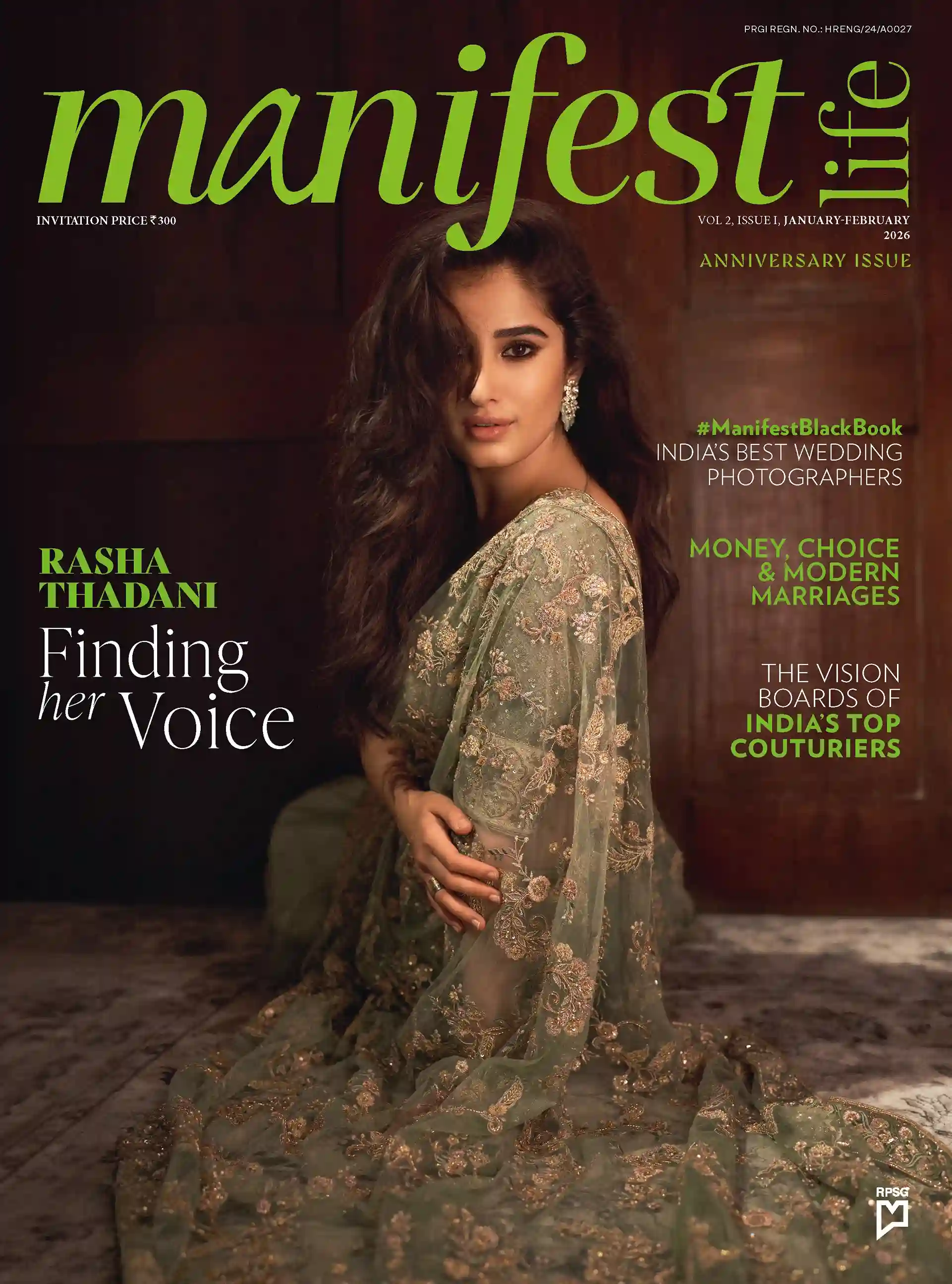
This story appears in Manifest India’s Issue 02. Subscribe here for more stories like this.