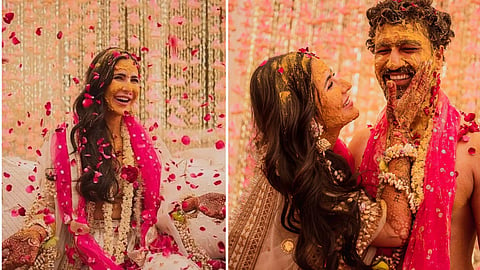

Welcome to Indian weddings—where guest lists stretch longer than email threads, and outfit changes rival runway shows. But, in the multicoloured chaos, there exists a moment of relative calm—the haldi ceremony. Before skincare routines had 10 steps or beauty brands discovered turmeric, haldi was already part of our culture. Beyond the marigold aesthetic and Insta-worthy moments, the haldi ritual is deeply communal, subtly spiritual, and refreshingly sensory. Though commonly associated with Hindu weddings, the ritual of applying turmeric before marriage predates religious boundaries. It has its roots in ancient Ayurvedic practices, and today, it is found—often under different names and formats—across multiple communities and faiths in the Indian subcontinent. It has its roots in Vedic traditions, with the Atharva Veda referencing turmeric as a plant of purification and healing. In Ayurveda, it’s been used for centuries for everything from skincare to digestion. And, over time, its essence—cleanse, connect, celebrate—found a home in almost every community in the subcontinent, with local spins and names. At its core, the purpose remains unchanged: to cleanse, to protect, and to prepare the bride and groom for the sacred journey ahead.

Across India, variations of the haldi ceremony are practised in nearly every community, with local customs, ingredients, and names. In Muslim families, particularly in North India and the Deccan, it is known as manjha or mayun. The ceremony often involves applying turmeric, and then observing a period of seclusion and rest for the bride and groom, symbolising a shift in life phase. Among Parsis, the pre-wedding ritual includes supra nu murat, where turmeric and other auspicious items like coconut and dates are applied in a ceremonial setting. This is followed by nahaan, a ritual bath, signifying purification. Sikh households hold the maiyan or vatna ceremony, where a paste of turmeric and mustard oil is applied, often alongside joyful singing and traditional music. It’s an occasion for family bonding as much as ritual preparation. Goan Catholics observe roce, a beautiful ceremony where the bride and groom are bathed in coconut milk, symbolising blessings and cleansing.
The emphasis is on simplicity and community warmth. In Bengal, the ceremony is known as gaye holud—literally ‘yellowing the body’—and involves applying turmeric brought by the groom’s family to the bride, followed by sweets and celebration. In Maharashtrian weddings, it’s called halad chadavane; in Andhra and Telangana, pellikuthuru; and in Kerala, it’s often part of a broader snanam ritual. Each version reflects regional values and ingredients, but remains rooted in the same symbolic purpose. Among tribal communities, the ritual may include the application of herbal pastes, clay, or forest-based oils, grounded in nature-centric beliefs that emphasise fertility, renewal, and the transition into a new life stage.
The haldi ceremony usually takes place a day or two before the wedding. The bride and groom sit in a designated space— often surrounded by music, flowers, and enthusiastic relatives—while a paste made of turmeric, sandalwood, rosewater, yoghurt, and oils is applied to their skin. There’s singing, laughter, the occasional impromptu dance-off. The ritual is informal by design— meant to let everyone unwind before the big day. And no, it’s not just symbolic. Every element has a purpose: the application is about blessings from loved ones. The MVP ingredient, turmeric, is known for its anti-inflammatory and brightening properties. And the messy, chaotic energy is the emotional palette cleanser before the main wedding production begins.
Haldi may be ancient, but turmeric is a hot property in the beauty world. From boutique Ayurvedic brands to dermatologist-backed formulas, turmeric is showing up everywhere for its anti-inflammatory, brightening, and acne-fighting superpowers. Kiehl’s Turmeric and Cranberry Seed Energising Radiance Mask, Forest Essentials’ Haldi Varnya mask condense the ceremony into a weekly self-care moment, while many of Ranavat’s products boast turmeric as their hero ingredient for brightening and anti-inflammatory effects. Inde Wild has a 15% Vitamin C product packed with ashwagandha and turmeric. It’s most popular in formulations of face masks and ubtans that even out skin tone and exfoliate, serums for calming redness and irritation, and moisturisers and creams combining turmeric with ingredients like niacinamide or Vitamin C. And the modern haldi ceremonies are getting serious upgrades—from both a skincare and cultural lens. Couples have started viewing the haldi ceremony not just as a tradition, but as a natural pre-wedding skincare ritual.
Weddings are an emotional marathon. Between logistics, family dynamics, and finding the right shade of lipstick, it’s easy to lose sight of what you’re celebrating. Think of the haldi ceremony as a ritualistic pause. It’s skincare meets community care. Just like your nighttime routine helps you reset after a long day, the haldi ritual helps the bride and groom reset before one of the biggest days of their lives. It’s tactile, sensory, and slightly messy. It’s also the one event where being unfiltered is quite literally the point. In the age of hyper-visibility and digital planning spreadsheets, this ceremony reminds us that some of the best rituals are still the simplest ones. So, whether you’re planning your wedding, attending one soon, or just need a reason to revisit that turmeric face mask, you now know that ‘Haldi Day’ isn’t just about glow— it’s about feeling grounded, inside and out.
Some common innovations and additions include substituting turmeric with multani mitti (Fuller’s Earth) for those with sensitive skin or turmeric allergies. It cools, tightens pores, and gently exfoliates. You can even add aloe vera, sandalwood, honey, or rose petals—ingredients known to soothe and hydrate the skin while retaining the aesthetic of the ritual. Creating DIY haldi bars, where guests can customise their paste with different natural ingredients—an interactive way to participate. Using biodegradable flowers and eco-friendly decor, in line with sustainable wedding practices. Some couples even opt for prehaldi massages or meditation sessions, framing the event as both ritual and rejuvenation.