Some weddings are gorgeous to look at, and then some weddings completely pull you into their world from the very first moment. The Wedding Square has built its name creating exactly those kinds of celebrations. The brand that was started in 2022 by four friends who had already spent years working together feels less like a typical wedding company and more like a creative collective that genuinely understands how to turn emotions into experiences.
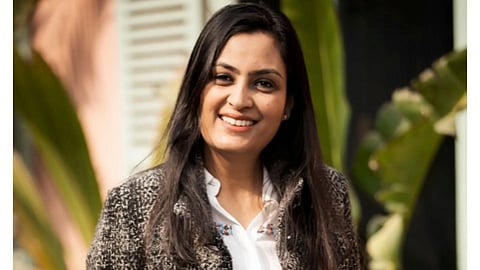
At the centre of it all is Shweta Mehta, Co-founder and Creative Director, whose design approach goes far beyond pretty décor and floral arrangements. With over two decades in the industry, she focuses on how a wedding should feel, how guests move through a space, the energy of a ceremony, and even those little unexpected moments people remember years later.
Other members of the brand include Nitin Mathur, who drives the company’s vision and growth; Savita Gadhiok, who anchors planning with precision; and Ashim Aggarwal, who brings ideas to life through production. Each operates within its own domain, yet everything comes together seamlessly, much like the square they’re named after. The symbolism is deliberate: four equal sides, each essential to the whole.
From curating intimate destination weddings in Kyoto and Lake Como to going all out and creating dreamy settings for those larger-than-life celebrations in India, The Wedding Square blends thoughtful design with seamless planning, creating weddings that feel personal, immersive, and impossible to forget. Not just that, they have also designed some very beautiful wedding experiences for some high-profile names, such as Hardik Pandya, collaborations with brands including Dainik Bhaskar and Ekaya Banaras led by Palak Shah, and her wedding to an entrepreneur such as Avnish Chhabria. Yet, their focus has remained unchanged, crafting thoughtful, well-executed celebrations rather than chasing scale for its own sake. Industry recognitions, including platforms like WeddingSutra and decor-led showcases, have followed, but for the team, the real metric remains the work itself and the conversations it sparks.

Manifest: The idea of “four equal sides” is central to your identity - how do you ensure that balance actually holds in high-pressure, real-time wedding scenarios
Shweta Mehta: Balance, for us, isn’t about everyone doing everything; it’s about everyone knowing exactly what they’re responsible for. In high-pressure situations, that clarity becomes critical. Design, planning, production, and overall vision operate independently but stay in constant conversation. Because we’ve worked together for so long, there’s an instinctive understanding of when to step in and when to step back. The structure holds because the trust is already in place.
M: You describe the brand as a collective rather than a company - what does that look like in practice, especially when creative differences arise?
SM: It means the idea always takes precedence over the individual. Differences do come up, but they’re rarely about ego; they’re about perspective. The person closest to the client usually leads the direction, because they understand the brief most intuitively. The rest of us challenge, refine, and build on that idea. It’s less about consensus and more about arriving at something that feels right for the client and the space.
M: From 2022 to now, the brand has scaled quickly - what were the turning points that accelerated that growth?
SM: The biggest catalyst was the foundation itself. We came in with years of experience, long-standing relationships, and a shared way of working. A series of destination weddings in locations such as Kyoto, Cannes, Sri Lanka, and Lake Como became defining moments. Each of these pushed us to adapt quickly, whether it was navigating cultural nuances in Kyoto or delivering high-impact visuals in Cannes. That visibility helped shape how the brand was perceived.
At the same time, working with a diverse set of clients, from high-profile names like Hardik Pandya to collaborations with Dainik Bhaskar and Ekaya Banaras’s owner, Palak Shah’s wedding with Avnish Chhabria, added to that momentum. But more than any single project, it was the consistency of experience that mattered. A lot of our growth has come from word of mouth: people attending a wedding, experiencing it fully, and then reaching out or referring us forward. Industry recognition from platforms like WeddingSutra and decor-led showcases helped, but the real turning point has always been the work itself and how people respond to it.
M: Your work resists repetition in an industry that often leans on trends - how do you consciously avoid falling into a signature style trap?
SM: We don’t start with design, we start with people. Every brief is different, every location is different, which naturally shifts the outcome. This translates into work that resists repetition, whether it’s a scaffold-led construction-themed celebration that reimagines industrial elements as design statements, or a garden mandap that feels both expansive and intimate.
Of course, there’s a certain sensibility that comes through, but we’re not trying to replicate a look. The effort goes into reinterpreting each idea from scratch, even if the theme feels familiar.
M: How do you decide which projects to take on, especially when you’re not chasing scale for its own sake?
SM: We look at the client’s openness, the scope for creativity, and whether we can genuinely add value to the experience. We don’t aim to do a high volume of weddings; we prefer to stay involved, stay invested, and do fewer projects well.
M: Shweta, you talk about designing for the “unknowns” - can you share a moment where those unseen elements completely changed the outcome of a wedding?
SM: There have been moments where everything is perfectly planned on paper, but the energy shifts on the ground: weather changes, guest movement feels different, or a space behaves differently than expected. In one instance, the way guests naturally gathered altered how the ceremony unfolded, and we had to quickly rework the flow to make it feel more intimate. Those adjustments aren’t visible, but they define the experience.
M: Your approach goes beyond aesthetics into movement and emotion - how do you translate something so intangible into a structured execution plan?
SM: By breaking it down into smaller, tangible decisions. Movement becomes layout. Emotion becomes pacing. Energy transitions between moments. We map out how a guest enters, where they pause, what they see, and how the space evolves through the event. It’s structured, but the intent behind it is always emotional.
M: When working across culturally distinct locations like Kyoto and Lake Como, how do you strike the balance between local sensitivity and your own design voice?
SM: It starts with respecting the space you’re in. Every location has its own rhythm, its own way of functioning. We spend time understanding that before introducing our ideas. Our design voice adapts; it doesn’t impose. The goal is to create something that feels relevant to the location but still carries our interpretation.
M: What does collaboration between design, planning, and production look like on a day-to-day level within your team?
SM: There isn’t a fixed handover from one team to another. Design decisions are made with execution in mind, planning considers aesthetics, and production feeds back into both. There are constant check-ins, discussions, and recalibrations. That overlap is what keeps everything cohesive.
M: Can you walk us through how a fleeting client idea evolves into a fully realised, immersive celebration?
SM: The starting point of any design journey is understanding what the client truly wants. For us, that begins with detailed conversations, often supported by a questionnaire, because getting to know our clients helps us understand not just their vision, but also their personality and the emotions they want their celebration to evoke.
From there, the idea is translated into layers - spatial, visual, and experiential. For instance, we once worked with a couple who wanted their ballroom to feel “diamond-struck” - sparkling, intimate, and deeply personal. We interpreted this by creating wall-to-wall projections featuring moments from their journey - their proposal, shared dances, and even their favourite song lyrics. The space became more than just a venue; it turned into a living, breathing reflection of their story. That is how a fleeting idea evolves - by grounding it in emotion and building it into an immersive environment.
M: Shweta, having started before the industry had a clear blueprint, what were some of the biggest challenges in carving your own path?
SM: Starting at a time when the industry lacked a clear blueprint meant that much of the journey was shaped through experience. There was no predefined path, so decisions were often guided by instinct, experimentation, and a deep understanding of what worked on the ground.
One of the biggest challenges was helping clients visualise the larger picture. Unlike today, where advanced tools and software allow for detailed previews, earlier projects relied heavily on verbal and conceptual communication. However, this challenge eventually became an advantage. It pushed us to articulate ideas more clearly, think more critically, and develop our own design language and working standards. In many ways, it allowed us to build a foundation that was entirely our own.
M: Looking back at your early years, how has your definition of “good design” changed over time?
SM: In the early years, good design was largely defined by visual appeal - the coming together of colours, elements, and aesthetics in a way that felt beautiful and cohesive.
Today, that definition has evolved significantly. Good design is no longer just about how something looks, but about the overall experience it creates. It encompasses spatial planning, guest movement, and the seamless flow of moments within an event. Even elements like food now play a role in design - not just in terms of taste, but in presentation and integration within the larger visual narrative.
At its core, good design today engages all five senses. It is about how a space feels, looks, smells, sounds, and ultimately, how it makes people feel long after the event has ended.
M: Was there ever a moment in your career where intuition failed you - and what did that teach you?
SM: Absolutely. In a field where intuition plays such a significant role, there have been moments where a design direction felt completely right in theory, but unfolded differently on the ground - whether due to logistical constraints, timing, or even how the client connected with the idea.
Those experiences are invaluable. They reinforce that while intuition is important, it cannot operate in isolation. It must be supported by careful planning, clear communication, and a willingness to adapt. Over time, you learn that the strongest outcomes often emerge not from rigidly holding onto an initial idea, but from evolving it in response to real-time conditions. Flexibility, in that sense, becomes just as important as vision.
M: As a team that has already worked with high-profile clients and global destinations, what does “staying relevant” mean to you today?
SM: It means continuing to evolve. Not getting comfortable with what has worked in the past. Staying curious, exploring new ideas, and being open to change.
M: For young creatives entering the wedding and design space now, what’s one mindset shift they need to succeed in an industry that’s far more evolved than when you began?
SM: To focus less on trends and more on understanding. It’s easy to get influenced by what’s already out there, but real growth comes from observing, learning, and developing your own perspective. And just as importantly, being organised, because creativity without structure doesn’t sustain.